

With a 600-plus-year history, the villages of southern Anhui offer a glimpse into the traditional way of life that gradually disappeared in Eastern China. They have faithfully preserved the original architectural style, urban layout, the surrounding environment, and intangible heritage elements such as art, cuisine, and customs.
Once known as Huizhou, the southern part of Anhui (安徽) – a landlocked province in Eastern China – is defined by the Huangshan mountain range. Its solemn peaks dominate the rugged terrain and are often cloaked in mist and cloud, giving the impression of traditional ink-wash paintings. Near the southwest slope of this poetic mountainscape are dozens of villages known for their traditional architecture and urban plan. Most were established during the feudal period by wealthy merchants or, in some cases, high-ranking officials returning home.
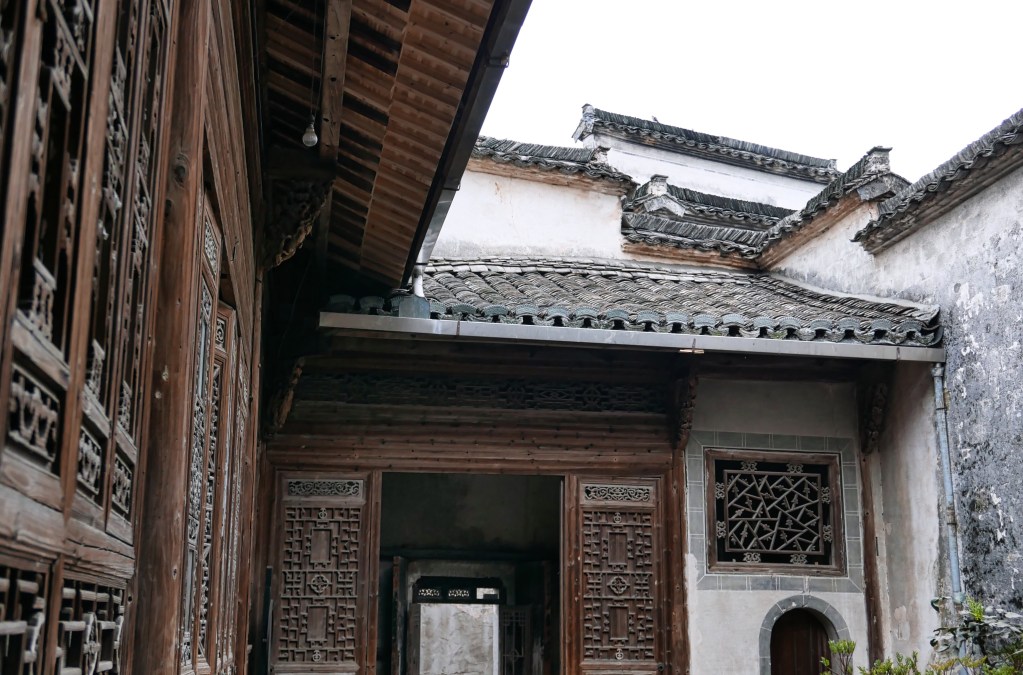
With eyes for beauty, the Huizhou people built their villages harmoniously with the environment. They strictly followed Fengshui principles, with water (in the form of lakes, streams, or waterways) as the core element. The houses are no less unique, featuring high whitewashed walls topped with horse-head gables to prevent fire. Ornate black tiles adorned the roofs, while intricately wooden or stone carvings bedecked the lintels and doorways. In spring, when the yellow rape blossoms, the villages look even more picturesque as the “golden sea” contrasts nicely with the muted tones and clean lines of the houses.


1. Hongcun
Founded in 1131 by a general during the Song dynasty, Hongcun – a UNESCO World Heritage Site – is one of the finest Hui villages in Anhui. It’s exceptionally well-preserved, consisting of 150 age-old residences. All look relatively simple outside, with only some tiny windows on the walls. But passing the decorated doorways, I realized how elaborate the buildings are. Usually, a Hui residence contains a central courtyard encircled by bays of exquisite rooms. Yet the scale and complexity changes based on demands.
The interior is mainly of wood, with beams, columns, and wall panels richly decorated with scenes from Chinese myths, daily life, and natural sceneries. Some residences also have stuccos, frescoes, calligraphies, statues, and fine porcelains. These elements add an aesthetic layer to the residence, demonstrating the owner’s wealth and prestige.
Hongcun is unique not only for its architecture and rich history but also for its auspicious ox-shaped layout. A nearby hill represents the head, two ancient trees are the horns, four bridges symbolize the legs, and the residences form the body. Additionally, a network of canals running throughout the village and culminating in two half-moon ponds are considered the intestine and stomachs, respectively. This urban design is deeply influenced by traditional culture and reflects the harmony between humans and nature.
One of the finest Hui villages in Anhui.


2. Lucun
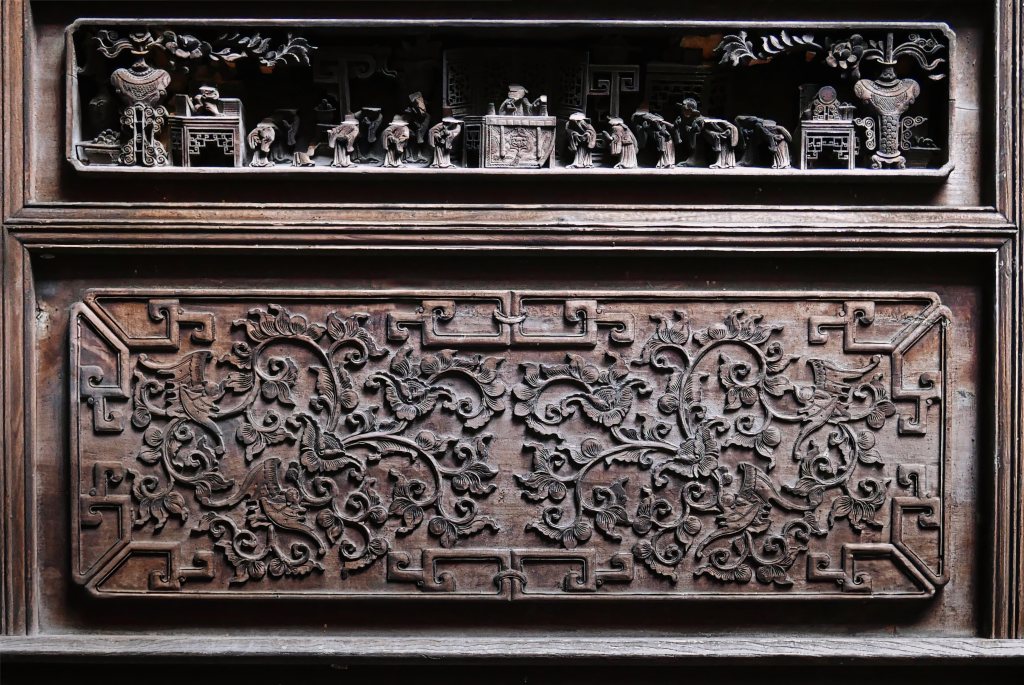
Approximately two kilometers northwest of Hongcun, Lucun distinguished itself for its remarkable wood carvings – one of the three decorative arts in ancient Huizhou. Here, the mainstream flat carvings evolved into multi-layered masterpieces. Some works were so sophisticated that they had up to nine layers and took years to complete. The themes of the carvings include mythological stories, ordinary life scenes, and wishes for prosperity and happiness.
Lucun takes its name from its founder, Lu Bangxie – a merchant of legendary wealth who later became a high-ranking official in the Qing royal court. It sits at the confluence of two small rivers, with around 49 well-preserved residences. The largest among them was the housing complex of Lu’s family, where he lived harmoniously with six wives and 24 children. Vast farmland surrounds the village, which turns into a fantastic “golden sea” of rape flowers during spring.



3. Likengcun
Though now located in Jiangxi province, Likengcun shares the characteristics and traditional architecture with Hui villages in southern Anhui. It’s famous for its extensive and diverse townscape that contains grand houses, ancestral halls, pavillions, wooden walkways, and stone-arched bridges. They skillfully integrated into an idyllic natural landscape, including a small river, fields of rapeseed flowers, and ancient camphor trees.
In addition to its picturesque scenery, Likengcun is renowned for being a hub of education. The village’s founding family, the Li, produced many accomplished individuals who attained high positions in the royal courts. Among them were 16 jinshi (highest degree holders in the ancient education system), 32 county magistrates, and 92 scholars from this provincial town. The most prestigious title they held was the fifth rank in the nine-grade officers system.


Tips for visiting Anhui
- Hongcun is accessible by long-distance bus departing hourly from Huangshan Bus Station (08:00 – 16:00) and Huangshan North Railway Station (09:35 – 17:35). The journey will take around two hours. All buses will briefly stop at Xidi, another UNESCO-inscribed village.
- Buses also run from Tangkou (the foothill of Mt. Huangshan) to Hongcun. They depart every two hours, from 07:40 to 15:40. More buses are available during the peak season.
- Admission to Hongcun is 104 CNY. The ticket is valid for three days, with unlimited entries. Seniors over 60 are free of charge. A passport is required.
- From Hongcun, there is a 30-minute scenic walk to Lucun. Alternatively, you can take a taxi that takes approximately 10 minutes.
- Reaching Likengcun and other villages of Wuyuan is more tricky. So far, the only way to get there is by car or participating in a guided tour.


Incredible beauty! Thank you for your very interesting report and the wonderful photos.
My pleasure! I’m glad that you like the post 🙂
So beautiful! The landscape, the traditional houses, and the wood carvings really make a trip to this part of China worthwhile. It’s great that you timed your visit when the rapeseed flowers were in full bloom. It’s nice to read about a corner of the country that is relatively less popular among foreign tourists.
Thanks for the compliment, Bama! I planned to see cherry blossoms as well. But it was too cold. So, only rapeseed flowers for me 🙂 Though the infrastructure is good, travel in rural areas is still challenging due to the language barrier and limited payment options.
Wow, so much beauty. It’s easy to tell that these beautiful villages were thoughtfully designed. Gorgeous photos.
Alison
Indeed. From the layout to the decorations, everything is carefully planned and executed. Thanks for the kind words, Alison 🙂