

For all the world, Bangkok is a cosmopolitan metropolis filled with glittering skyscrapers, colossal malls, multi-lane highways, and colorful street markets, making it Southeast Asia’s pinnacle of tourism. Yet amid this megacity lies a tiny island where the essence of old Bangkok is woven into the fabric of daily life: Rattanakosin, otherwise known as Rattanakosin Island.
Though not an island in its true sense, Rattanakosin is separated from the rest of Bangkok by canals dug to serve as moats for what was originally a fortified city center. This artificial island on the eastern bank of the Chao Phraya River was established in 1782 by King Rama I and served as the seat of power of Siam during the 18th and 19th centuries, replacing the former capital, Thonburi, on the opposite side of the river.
As the former aristocratic enclave, Rattanakosin is easily one of Bangkok’s most splendid and historically significant neighborhoods. It features mansions of royalty, dignitaries, and some of the most spectacular Buddhist temples in the Thai capital. Yet nothing can surpass the opulence of the Grand Palace – the official residence of Siamese kings until 1925, characterized by elaborate spires, stunning rainbow mosaics, and sophisticated architecture.


1. Grand Palace
Surrounded by high walls, Bangkok’s Grand Palace is a sprawling complex that occupies a large part of Rattanakosin Island. It covered an area of nearly 22 hectares, comprising a series of courtyards, palaces, ordination halls, and pavilions. The construction commenced in 1782, marking the inception of the Rattanakosin Kingdom, and likely drew inspiration from the spectacular design of the former royal palaces in Ayutthaya.
Every facet of the palatial complex, from its intricately crafted doors and roofs to its exquisite ornaments, embodies a fusion of Western and Chinese influences with traditional Thai architecture, showcasing the sophisticated Rattanakosin or old-Bangkok art style. The palace is now mostly reserved for ceremonial events. Yet it continues to captivate visitors with its royal splendor, establishing itself as one of Bangkok’s premier attractions.


Wat Phra Kew
Of all the awe-inspiring structures in the Grand Palace, Wat Phra Kew stands out as the complex’s spiritual heart. Originally a royal chapel, it now serves as a pilgrimage site for Thai Buddhists as it houses the country’s most holy image, the Emerald Buddha. This 66-centimeter deep green Buddha statue, in lotus posture and clothed in gold and precious gems, was brought to Bangkok from Vientiane following the Siamese invasion in the 18th century. Legend has it that the Emerald Buddha brings prosperity to the country where it is situated, leading to the name Rattanakosin – meaning “where the Emerald Buddha resides” – chosen for the new Siam Kingdom. Despite being called Emerald Buddha, the statue is of jasper.
Only the Thai kings and, in their absence, the crown princes are allowed to touch the Emerald Buddha. The sacred statue is safeguarded in an architecturally fantastic ordination hall whose intricacy and colors are second to none in the country. Encircling this hall are marble walls painted with 178 vivid murals from the late 18th century, depicting scenes from the Ramakian – the Thai version of the epic Ramayana. Though expansive and magnificent, no monks would be lodged in Wat Phra Kew as the temple lies within the palace compound.


2. Wat Pho
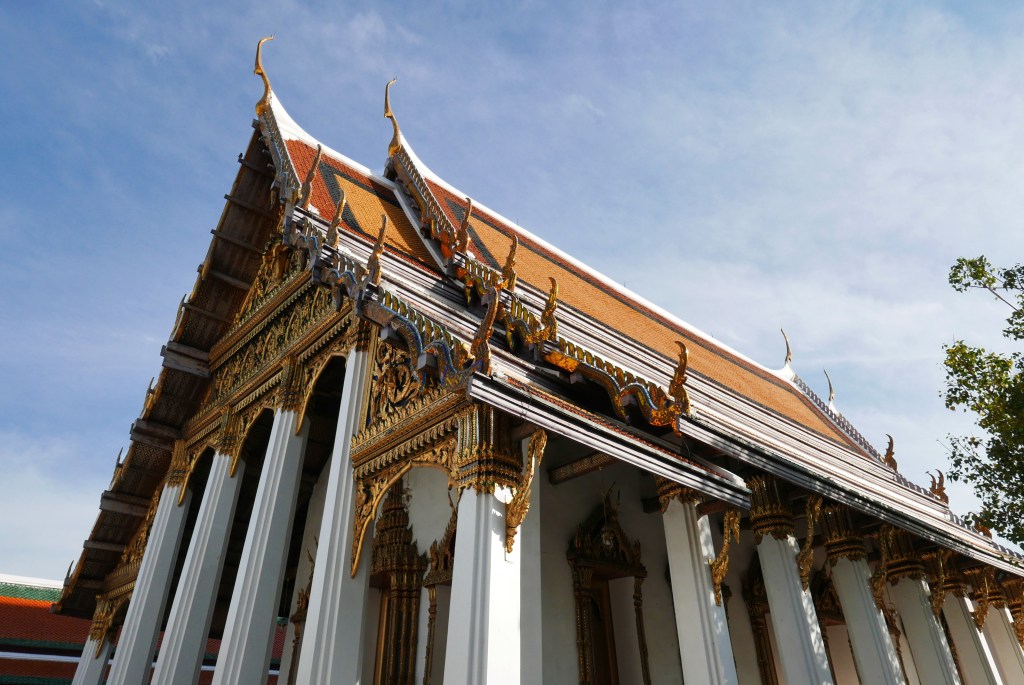
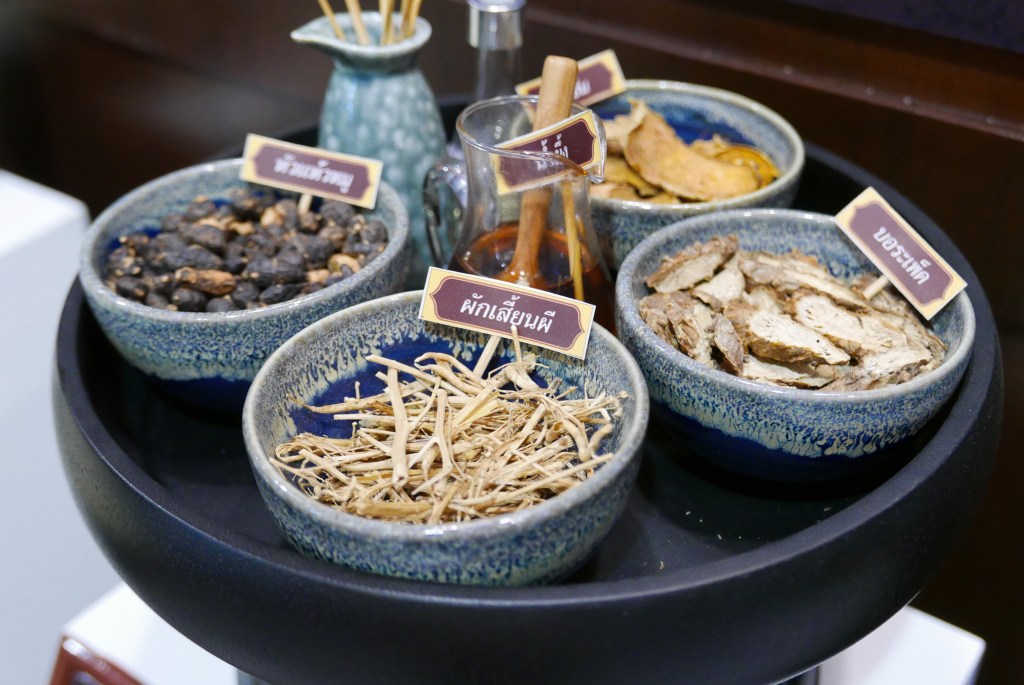
Just a few steps from the Grand Palace lies Wat Pho, one of Bangkok’s most celebrated monasteries. It was built during the late Ayutthaya period, around the 16th century, and restored in 1788 by King Rama I. But Wat Pho’s current grandeur was only realized fifty years later, under the reign of King Rama III, who expanded and renovated the temple compound. The King also turned the monastery into Bangkok’s first university, teaching students in religion, literature, Thai medicine, and even the art of massage.
Like the Grand Palace, Wat Pho includes a series of peaceful courtyards housing the country’s largest collection of Buddha statues. Adorned with gold leaves, they grace the corridors and ordination halls, setting the stage for Wat Pho’s piece-de-resistance – the Reclining Buddha. This gilded marvel, measuring 46 meters long and 15 meters high, portrays the Buddha’s passage into nirvana, with feet delicately embellished with mother-of-pearl inlays.
Bangkok’s most celebrated monastery.
Alongside the Buddha images, Wat Pho showcases a mesmerizing array of mosaic-covered chedis. These vibrant, ceramic-tiled structures are dedicated to the first kings of Thailand’s current reigning dynasty. The compound also features small Chinese-style rock gardens, offering a respite rich in greenery and quirky statues.




3. Bangkok National Museum
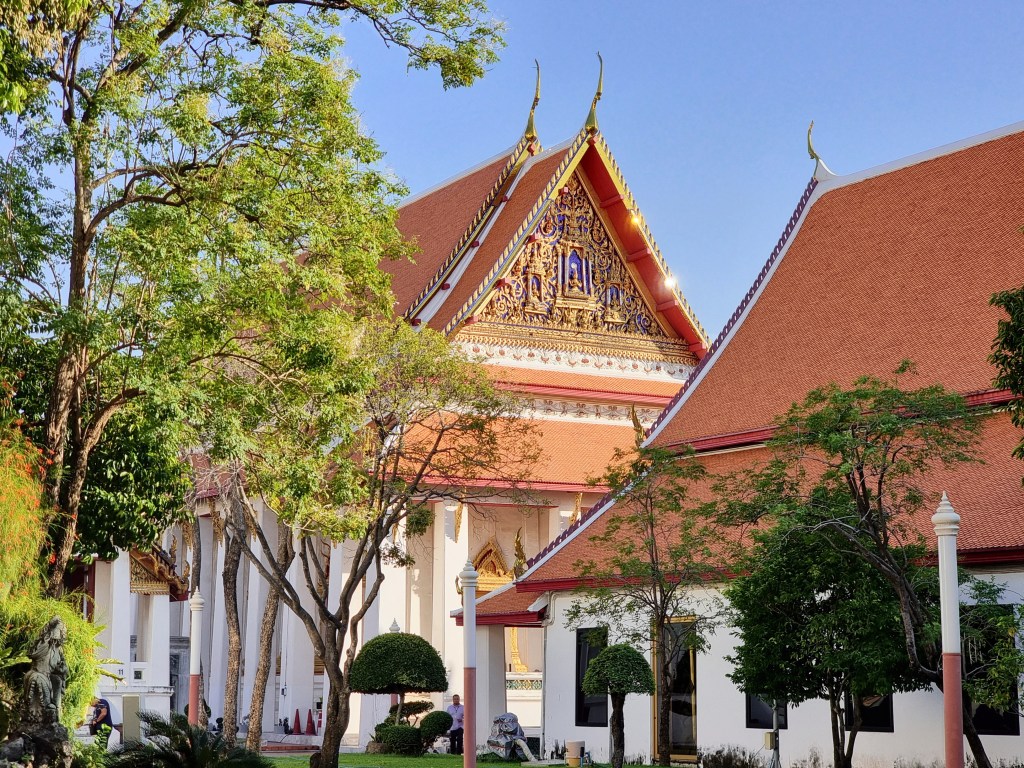
Positioned at the northern end of Rattanakosin Island, the Bangkok National Museum is the main branch of the National Museums of Thailand. Initially founded by King Rama V in the late 19th century to preserve his father’s antique collection, it has since evolved into one of Southeast Asia’s most expansive museums. The museum occupies the former viceroy residence, which mirrors the architectural styles and layout of the nearby Grand Palace. However, it displays a more understated elegance, reflecting the subordinate status of its past owners.
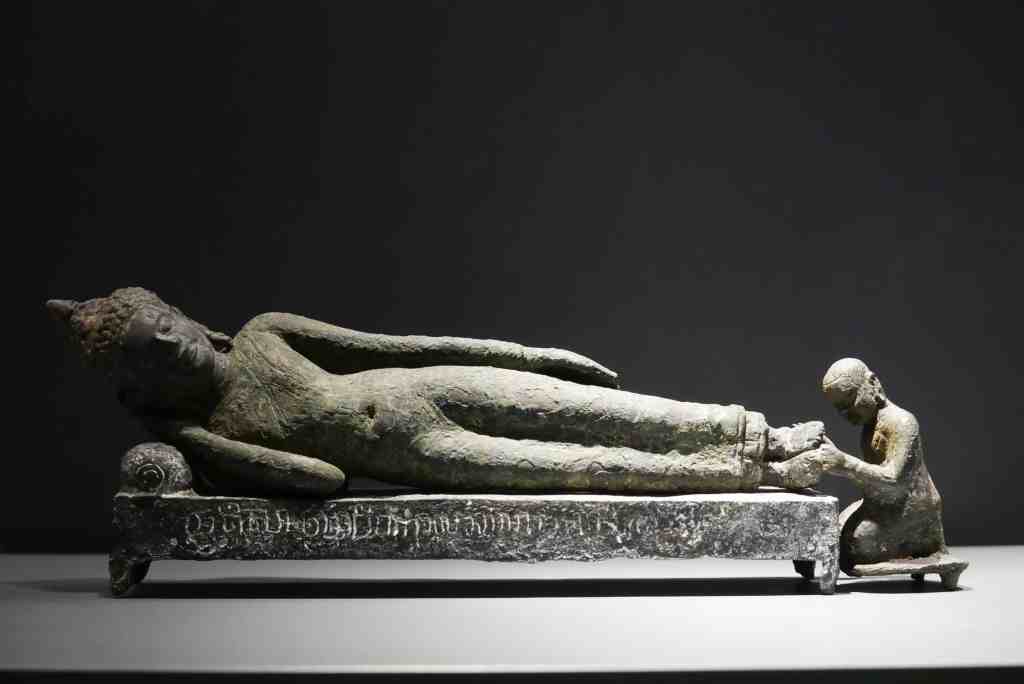
The Bangkok National Museum exhibits a wide range of artifacts from Thailand’s colorful history, spanning from the prehistoric to the Bangkok era. On display are ceramics, masks, textiles, woodcarvings, gold and silverware, regalia, weaponry, and some of the country’s most exquisite sculptures. Additionally, visitors can marvel at well-preserved murals, lavishly ornate funeral chariots once used by royalty, and the throne of King Taksin, who relocated the Siamese capital from Ayutthaya to modern-day Bangkok (yet on the other side of the Chao Phraya River).


4. Wat Arun
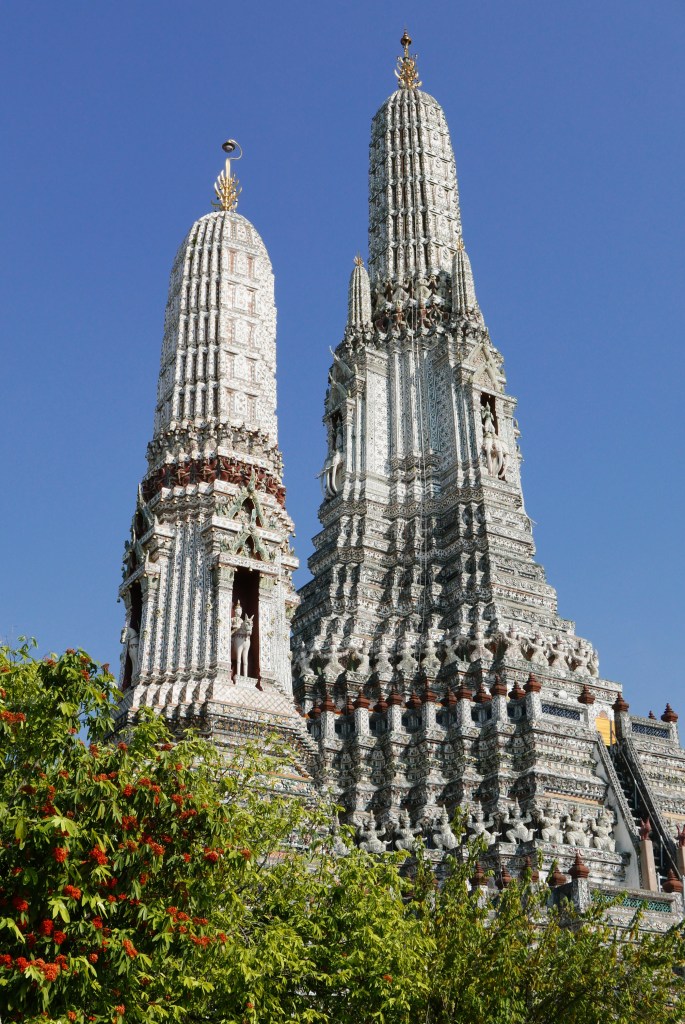
Though not strictly belonging to Rattanakosin Island, Wat Arun in Thonburi is crucial in Bangkok’s history. After the fall of Ayuthaya, King Taksin stumbled upon a small local shrine at this site, which he interpreted as an auspicious symbol. He then established it as the new capital of Siam, with the shrine becoming the royal temple housing the sacred Emerald Buddha. Later, when the center of power and the statue shifted to the other side of the river, King Rama II renamed the temple Wat Arun, after the Hindu God of Dawn.
These days, Wat Arun, often known as the Temple of Dawn, is among Thailand’s most iconic sights. Its main feature – a corn-cob-shaped prang rising from the river bank – epitomizes the sunset in Bangkok. The spire measures 86 meters high and is beautifully encrusted with mosaics made from shards of multi-hued Chinese porcelain. It’s crowned with a gilded seven-pronged trident and encircled by four smaller satellite prangs, evoking Mount Meru, the home of Hindu deities. Next to the prang stands an equally splendid ordination hall, featuring a mosaic-ornate entrance and elaborate stuccoworks.


5. Wat Suthat
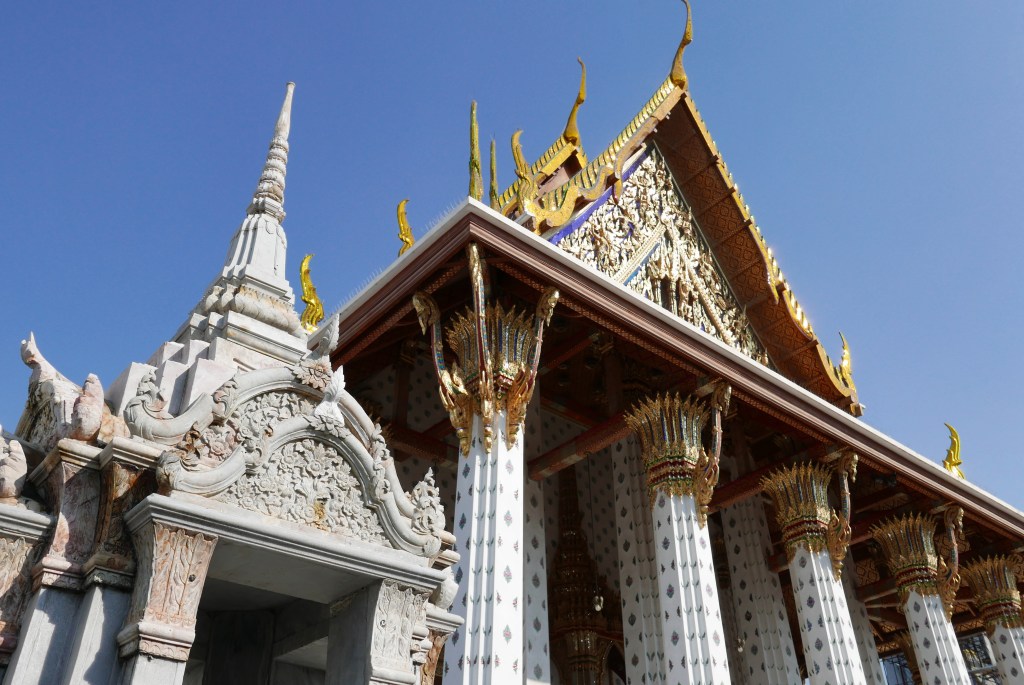
Another outstanding place on Rattanakosin Island is Wat Suthat – one of Bangkok’s oldest and most prestigious temples. It dates back to the beginning of the Rattanakosin Kingdom, with King Rama I commissioning its construction in 1807. However, the temple wasn’t completed until forty years later, under the reign of King Rama III. Wat Suthat holds the highest grade of royal temples in Thailand (only eight such temples throughout the country), as it is closely associated with Brahman priests who conduct major royal ceremonies.
Besides its religious significance, Wat Suthat is renowned for its marvelous ordination hall, which features an ornate sweeping roofline and a massive Buddha statue, the Phra Si Sakayamuni. At eight meters tall, it’s the biggest surviving bronze statue from the Sukhothai period, cast in the ancient capital of Siam in the 14th century. The gilded Buddha image contrasts sharply with the larger-than-life mural paintings, rich in dark colors and details, depicting the three worlds in Thai Buddhist cosmology. Right outside the temple stands another captivating sight: a 20-meter-high wooden swing painted brightly red, historically used for Hindu festivities.


Tips for visiting Rattanakosin
- Rattanakosin is a compact island that is explorable on foot. The district is also accessible by the Blue Line metro, with stations at Sanam Chai or Sam Yot.
- Tickets for the Grand Palace are available both online and at the counter. Admission includes a Khon performance at Sala Chalermkrung Royal Theatre and entry to the Bang Pa-In Palace in Ayutthaya. It’s wise to check the opening hours in advance to avoid falling victim to scammers in the area.
- Wat Arun is easily accessible by the cross-river ferry from Tah Tian Pier, just a short walk from Wat Pho and through a market. While the queue might be long, it tends to move quickly.
- When visiting the temples and the Grand Palace, remember to dress modestly out of respect for their religious significance.
Recommended Stay
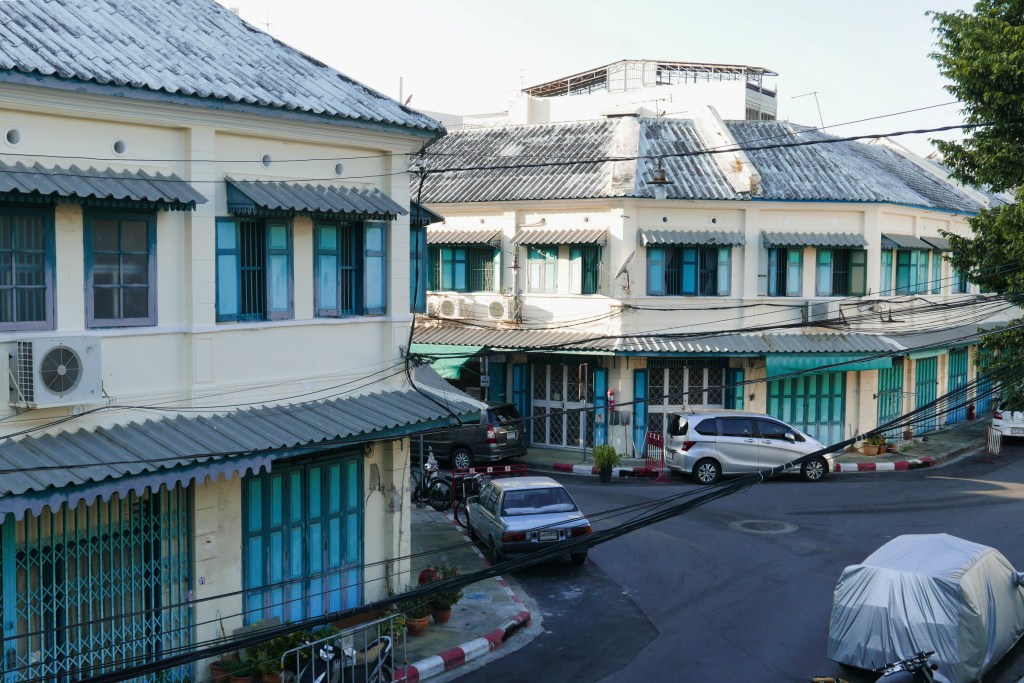
Beyond the grand palaces and temples, Rattanakosin is also home to traditional shophouses owned by ethnic Chinese. Many are given a new lease of life thanks to a new generation of creatives who aim to preserve Bangkok’s old charm. One such example is the Heritage Corner 1905, a boutique hotel in a residential square established in the early 20th century by King Rama V. The area is well shielded from the noise and bustle of nearby streets and features family-run businesses beloved by locals for genuine homemade food.
Only a small name tag above the wooden door of this nostalgic two-story building reveals that it’s no longer a teahouse for the merchant class but a unique three-room hotel full of character. It’s a luxurious haven that seamlessly blends colonial-style decor with refined, modern amenities. This renovation project took four years to complete, with every detail meticulously attended to. Only what was needed was renovated, keeping relics such as the layout, plastered brick walls, and part of the wooden flooring.


DISCLAIMER:
My recommendation is written based on my personal experience. It was neither sponsored nor solicited by Heritage Corner 1905 or any third party. All texts and pictures reflect my opinions and are provided solely for informational purposes. I will not be liable for errors or damages using this information.


Chờ đọc bản Tiếng Việt. LGĐ
Thanks bạn. Bản tiếng Việt online rồi nhưng do link bị sai. Mình vừa chỉnh lại bạn xem qua nhé.
I remember being awed by Wat Phra Kaew on my first trip to Bangkok. Back then, I never saw something so ornately decorated with vivid colors. Staying in the area sounds so interesting — I’m a big fan of repurposed old buildings, and that hotel looks charming. This post and the one on Ayutthaya really make me think if it’s about time for me to pay the Thai capital another visit.
It resembles District 5, with most restaurants and shops being family-owned 🙂 Another advantage of staying in that area is that you don’t have to deal with all the traffic jams and dishonest tuk-tuk and taxi drivers.