
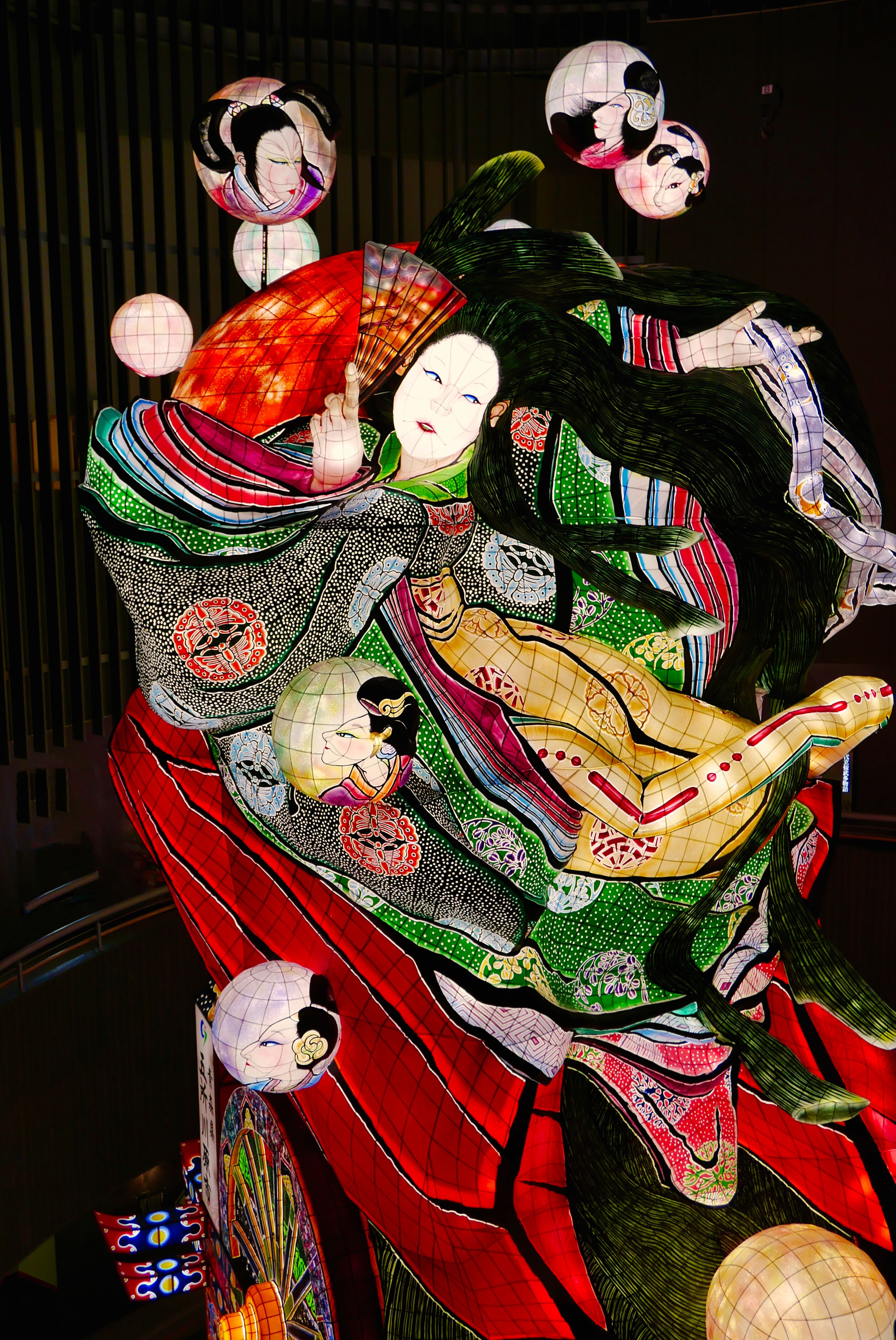
Gigantic, colorful, and surprisingly intricate, the lanterns of Aomori Prefecture deserve to be called masterpieces. They are the main features of Nebuta Matsuri – one of Japan’s three biggest and most popular festivals that takes place every summer.
For five nights each August, the usually quiet streets of Aomori become bustling with light, colors, and riotous noise of the Nebuta Matsuri. It is one of Japan’s three largest and most distinguished celebrations, attracting millions of revelers from far and wide. The pièce de résistance of the festival is the parades of the illuminated floats. They are constructed of painted washi paper over wireframes and might take up to a year to complete.
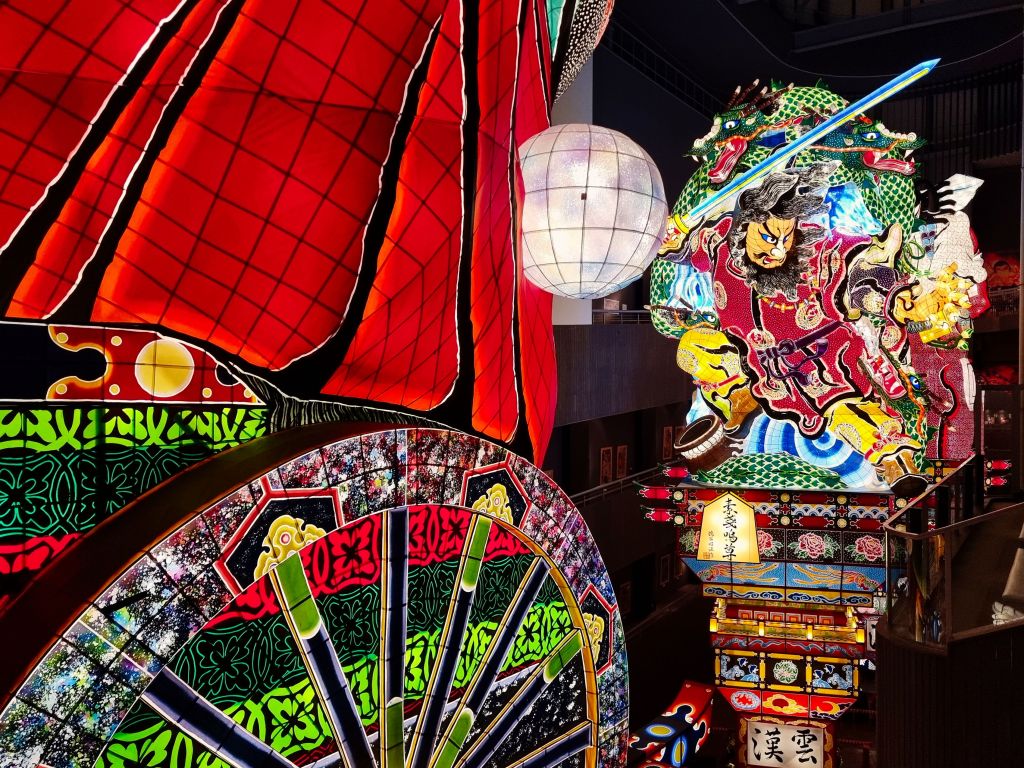
These delicate marvels vividly depict gods, heroes, demons, and other mythical figures from Japanese and Asian folklore. Yet the scale and style of the lanterns vary from town to town. Wherever the floats roam, they are accompanied by teams of taiko drummers, musicians, and Haneto dancers who entertain the crowd with their skipping while enthusiastically chanting “Rassera! Rassera!”.
Though Nebuta Matsuri is fascinating, it’s not always possible to be there during this busy period. Besides, seeing the parades while jostling for space among a sea of people is not an easy task. For these reasons, three museums were set up across Aomori Prefecture to bring the extraordinary festival closer to visitors. These year-round exhibits feature dozens of elaborate lantern floats, costumes as well as other cultural specialties.
A distinguished summer festival.


1. Nebuta Museum Wa-Rasse (Aomori City)
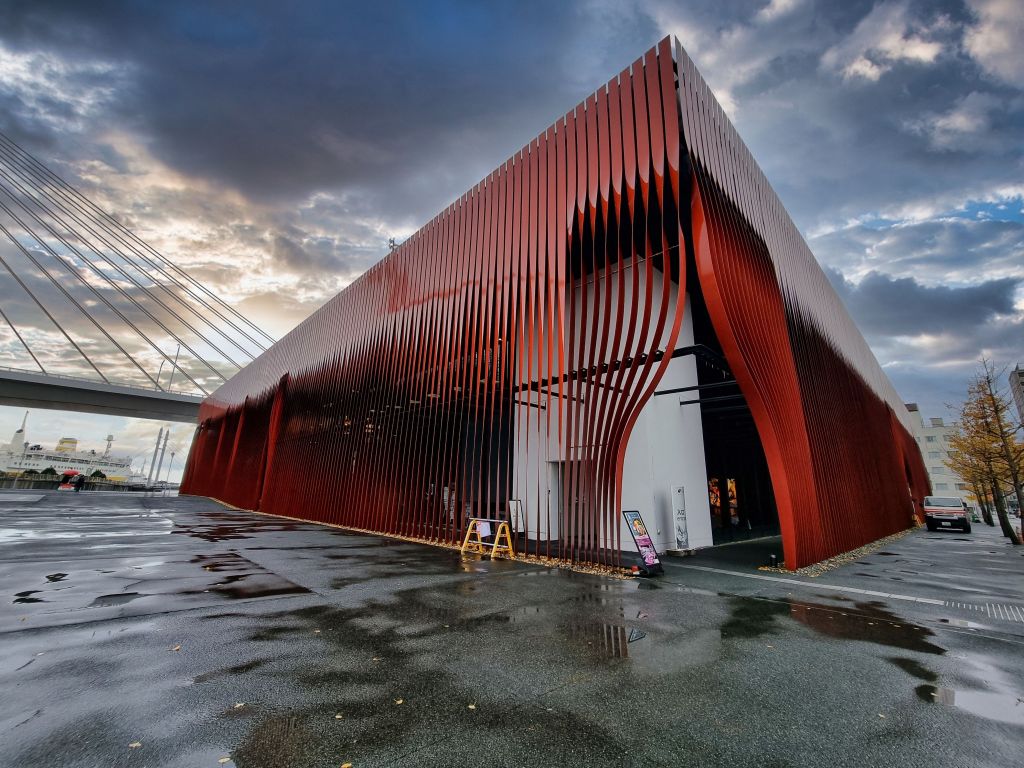
Resting on the waterfront of Aomori City, the Nebuta Museum Wa-Rasse (ねぶたの家 ワ・ラッセ) is unmistakable thanks to its deep red facade formed by a series of steel ribbons. Each is twisted and bent individually to form openings for light, views, and passageways. The screen-like exterior evokes the visual sensation of a theater drapes, separating the contemporary milieu of the city from the world of history and myth within.
Luminous giants from paper and light.
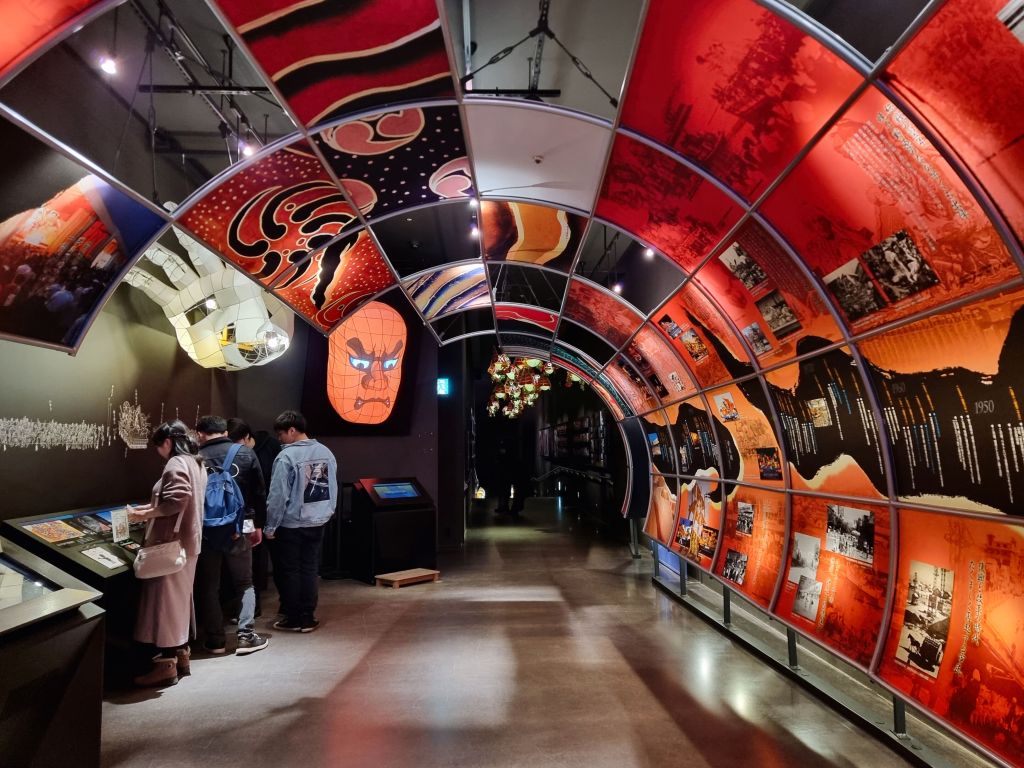
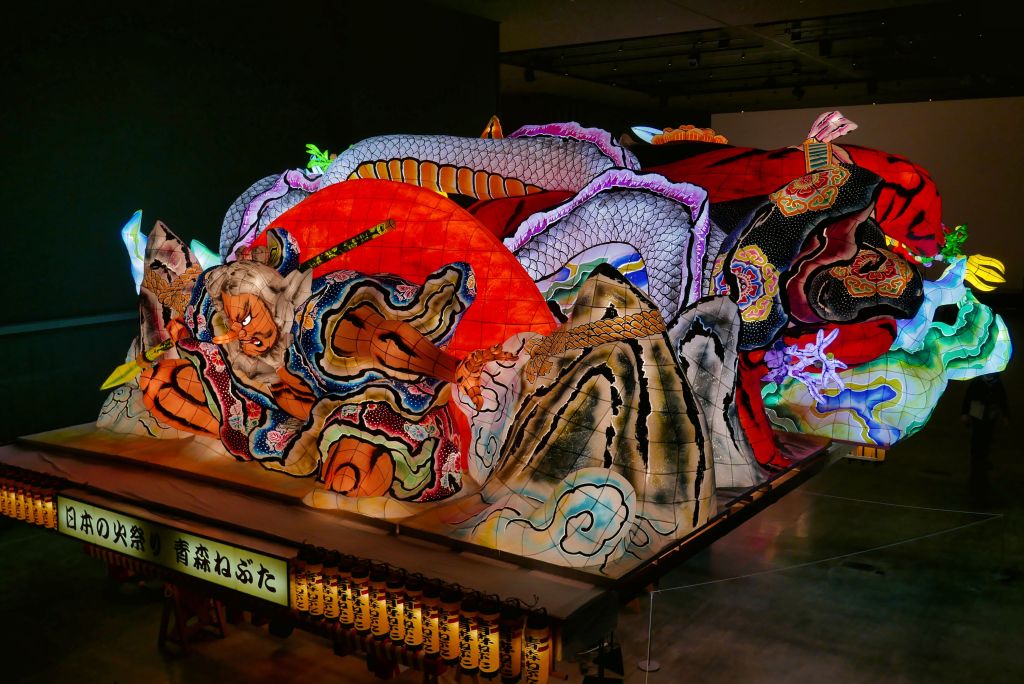
Visitors first pass through the Nebuta Tunnel, where the festival’s 300-year history is unveiled. They can also see how the techniques and styles used in float construction have changed over the years. The tunnel then opens up to a dimly-lit hall that houses four full-sized floats that participated in the last August. Here, you can closely examine the impressive scale and intricate details of the Nebuta – luminous three-dimensional giants created from paper and light. Some objects are even touchable, and visitors can have a look inside to have a better understanding of the technical work that is otherwise difficult to grasp.
At Nebuta Museum Wa-Rasse, the atmosphere of the festival is also recreated, with experienced musicians playing flutes and taiko drums on stage. They are accompanied by Haneto dancers, who will show visitors the joyful dance steps. Alternatively, visitors can try their hands on the taiko drums, which are the same as those found in the actual parades.


2. Neputa Mura (Hirosaki)
About forty kilometers southwest of Aomori City, the castle town of Hirosaki has its lantern festival called Neputa Matsuri – a result of the subtle dialect variation between the two towns. It originates from an old farming tradition to ward off sleep demons and celebrate the victorious returns of troops. Parades of illuminated lantern floats are the highlight of the event. However, some features make Neputa Matsuri different from its Aomori counterpart.
In Hirosaki, most lantern floats (Neputa) are semi-circular, roughly the shape of a hand-held fan. They tend to be affixed on a base that can rotate and wheel out onto the streets. The floats are then decorated with vibrant scenes from kabuki, including drawings of heroic warriors in the front and beautiful ladies in the backside. In comparison to those in Aomori, Neputa are significantly smaller. But what they lack in size is compensated by numbers, with up to 80 floats parading around the town at the same time.
Fan-shaped lanterns decorated with scenes from kabuki.
To experience the thrill of Neputa Matsuri outside of the festival period, head over to Neputa Mura (ねぷた村), or Neputa Village. Every aspect of the famous spectacle is on display in this year-round museum, including the history, the musical instruments, and the glamorous fan-shaped lantern floats. There are also areas devoted to local handicrafts where artisans demonstrate their skills. Adding to that is a Japanese garden and a 19th-century teahouse where visitors can relax and enjoy Hirosaki’s flavors.
Tips: Hirosaki is easily accessible by local train from Aomori City. There are one to two trains per hour, taking 30 to 45 minutes. Afterward, ride the Dotemachi Loop Bus to Hirosaki Park, where the castle and the Neputa Village are located.


3. Tachineputa no Yakata (Goshogawara)
If you are impressed with the Nebuta in Aomori, you will undoubtedly be overwhelmed when seeing the lanterns of Goshogawara. In a hangar-like museum, three towering sculptures of washi paper proudly stand side by side. They depict a legendary samurai, a folk hero, and a Moon Goddess. Each weighs about 19 tons and reaches a height of 23 meters, equivalent to seven stories. These creations indicate an exceptional festival that occurs in this small town every August.
Dating back to more than 100 years ago, Tachineputa Matsuri – which means “festival of the standing floats” is the youngest among the three lantern festivals in Aomori Prefectures. It features parades of illuminated floats, escorted by pounding taiko drums, ethereal tones of flutes and cymbals, as well as cheerful chants and cries. Tachineputa was thought to be lost forever when a fire broke out in the 1920s, destroying nearly all of the original float blueprints. Fortunately, few survived and were found at the base of an old Neputa, leading to the revival of the festival in 1996.
A visit to Tachineputa no Yakata (立佞武多の館), or Tachineputa Museum begins at a shadowy platform on the highest floor. From there, the expressive facial features of the Neputa are all the more spectacular. Visitors then wind their way through the galleries and educational displays, while admiring the scale and delicate details of the floats. Though the museum’s main focus is the Tachineputa Matsuri, it also provides information about lantern festivals in other towns.
The world’s biggest paper sculptures.
Tips: The Resort Shirakami Train provides direct access to Goshogawara. It departs at 08:09 and 14:01 from Aomori City and takes approximately 60 minutes. Please note that it’s a tourist-oriented train, thus a seat reservation is required. Alternatively, you can take the local train. This option requires a transit at Kawabe, making the journey longer by 10 to 30 minutes. The Tachineputa Museum is just a stone’s throw away from the train station.



These lanterns are gorgeous. So much artistry has gone into each one. The museums would be a great place to be able to see them up close to catch those details, but seeing them in action much be a fantastic experience. Maggie
Definitely a feast for all five senses 🙂 Thanks for visiting, Maggie.
Wow what a splash of colour!
Great, isn’t it? And I still find it hard to believe that they burned nearly all of these artworks at the end of the festival 🙂
These are spectacular! I’d like to spend a year in Japan just going to festivals, but what a wonderful idea to create museums for the best pieces so they can be seen outside of the wild crowds. I know about the crowds as I went to two days of a festival in a neighbourhood of Tokyo that is attended by 100,000! I managed to find a concrete wall to stand on to get above the crowd.
Beautiful photos Len. Your post wants me want to go back to Japan.
Alison
Such a quick thinker 🙂 I don’t think I could survive in such a massive crowd. I remember I nearly got suffocated when participating in a festival a long time ago. Thanks for the kind words, Alison.
It’s incredible to see how intricate the lanterns are! I really love the bright colors and the incorporation of Japanese traditional designs on them. I appreciate that photo of a particular lantern of Goshogawara with a person standing next to it to give a sense of scale. It looks massive! It’s so cool that you experienced all this up close.
It was a lucky shot 🙂 I didn’t see her until I viewed the photo on my laptop. She was even smaller than the sculpture’s hair. It’s my first time seeing museums dedicated to a festival like this. Brilliant idea!