

Housing Bhutan’s only international airport, Paro is the main gateway to the mystical Himalayan kingdom. This alpine valley is known not only for its beautiful, fertile landscape but also for its rich culture, with numerous sacred and historical sites throughout the pine-clad hillsides.
Tiếng Việt
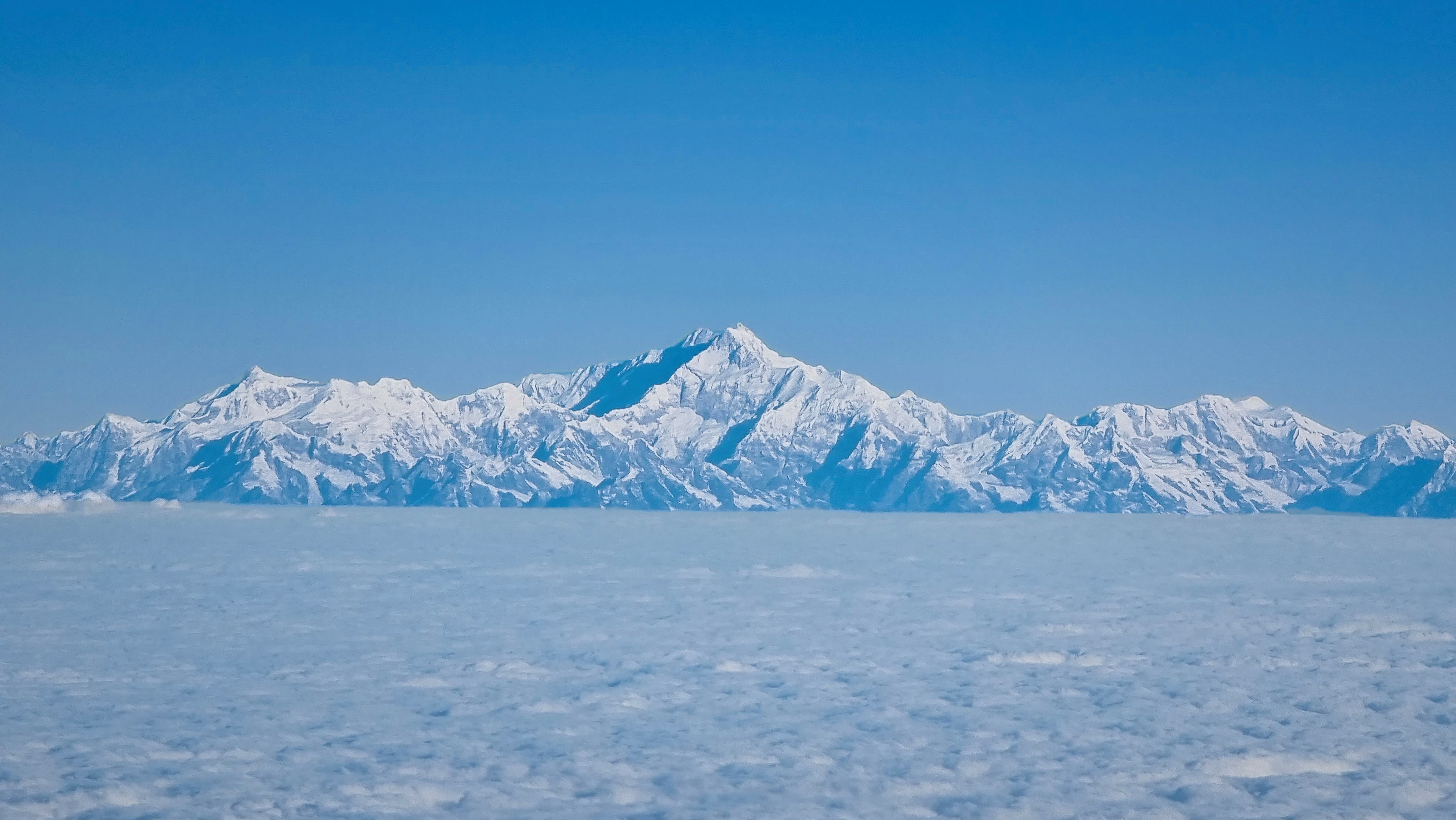
“Though the weather is a bit cloudy, you can still see the mountains on the left side”, the captain announced as our aircraft began to descend. I peeked through the window and was amazed by the snow-covered peaks rising dramatically from a sea of clouds. It was Jomolhari – the second-highest mountain in Bhutan and one of the country’s most sacred. I was just a few minutes away from my long-dreamed-about destination – Bhutan – a mystical kingdom embedded in the Himalaya that was praised for its high-value, low-impact tourism model. Here, culture, spirituality, and sustainability aren’t curated merely to attract tourists – they are integral parts of life.
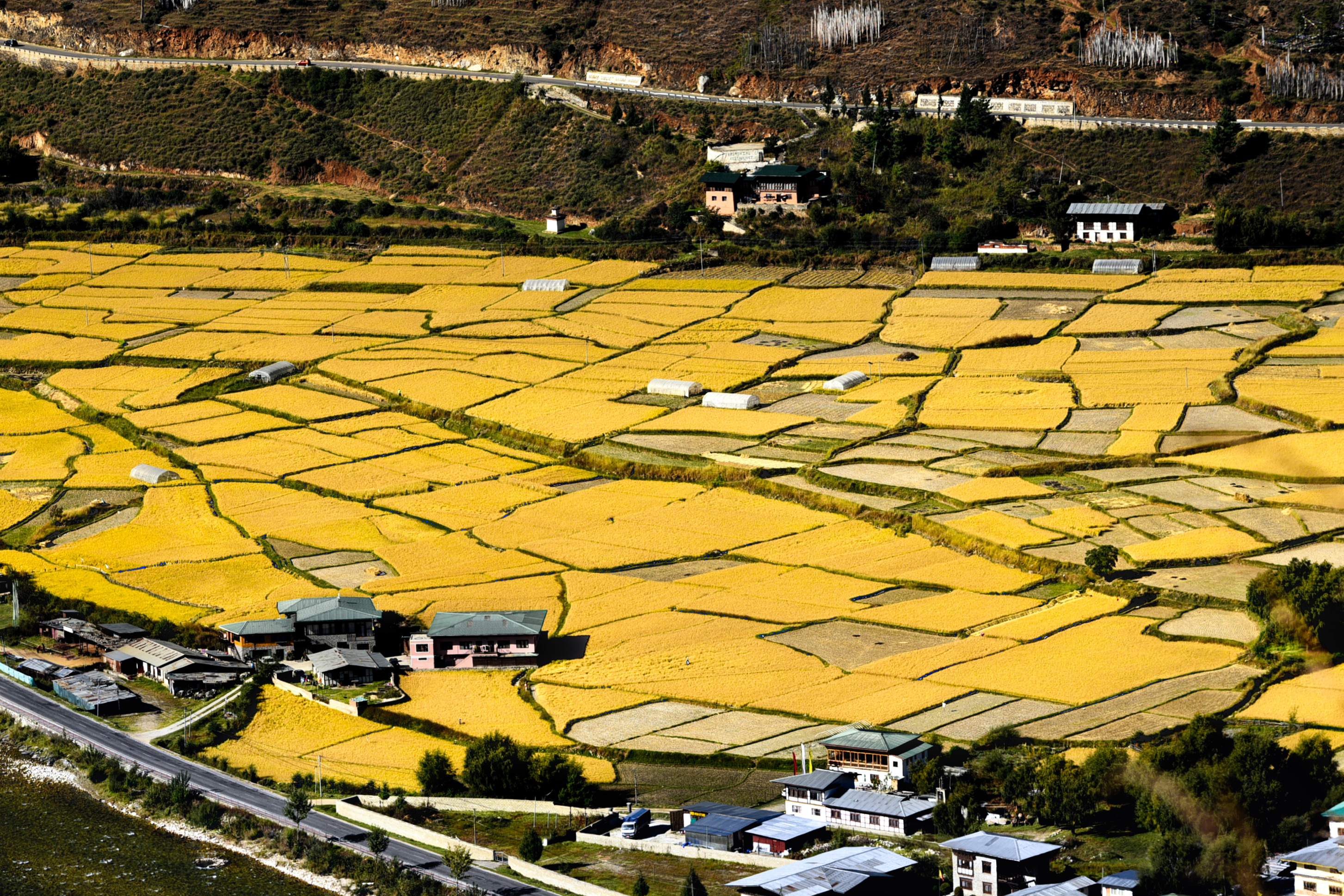
Passing layers of clouds, the aircraft continued to glide and maneuver through the mountainous landscape. It passed over densely forested hills and golden paddy fields before approaching Paro International Airport (2,280 meters above sea level). That was a hair-raising yet spectacular landing, unlike anything I have ever taken. By the time I passed customs, my polite and gentle guide, U. D., awaited me in a graceful knee-length grey gho, Bhutan’s traditional garment for men. “Welcome to the Land of the Thunder Dragon!” he gleefully said and offered me a white silk scarf, a symbol of warm-heartedness, honesty, and truth in Tibetan Buddhism. It also conveys wishes for a safe journey, which auspiciously began under a clear, crisp, autumnal sky.

Brief Introduction to Paro
Framed by snow-capped mountains, Paro is a wide, open, undulating valley where most journey into the Bhutanese kingdom begins. The alpine valley takes its name from the Paro Chhu River, whose source is the majestic Jomolhari (7,326 m), meaning the Dwelling Place of Goddesses. Its crystal-clear water flows through the valley, nourishing red rice fields and apple and peach orchards along its banks and making Paro one of the most fertile regions in the country. Meanwhile, the valley’s upper reaches boast lush green pine forests, with trails leading to remote monasteries and rocky outcrops that offer stunning views of the Himalaya and the luscious lands below.
Like elsewhere in Bhutan, spirituality is the essence of Paro, and one can find as many as 155 temples and fortress-like monasteries, or dzongs, scattered around this valley – often in the most audacious of places. For example, the decayed Zuri Dzong, established in the mid-14th century, is perched on a promontory, 680 meters above the valley floor. Or the hilltop Drukgyel Dzong, which served as a mighty stronghold on the historical trans-Himalayan trading route connecting Tibet, Bhutan, and southwards to the Bengal plains. Yet most spectacular of all is Paro Taktsang, often known as the Tiger’s Nest Monastery, which clings impossibly to the rock face at 3,120 meters at the northern end of the valley.




1. Paro Dzong
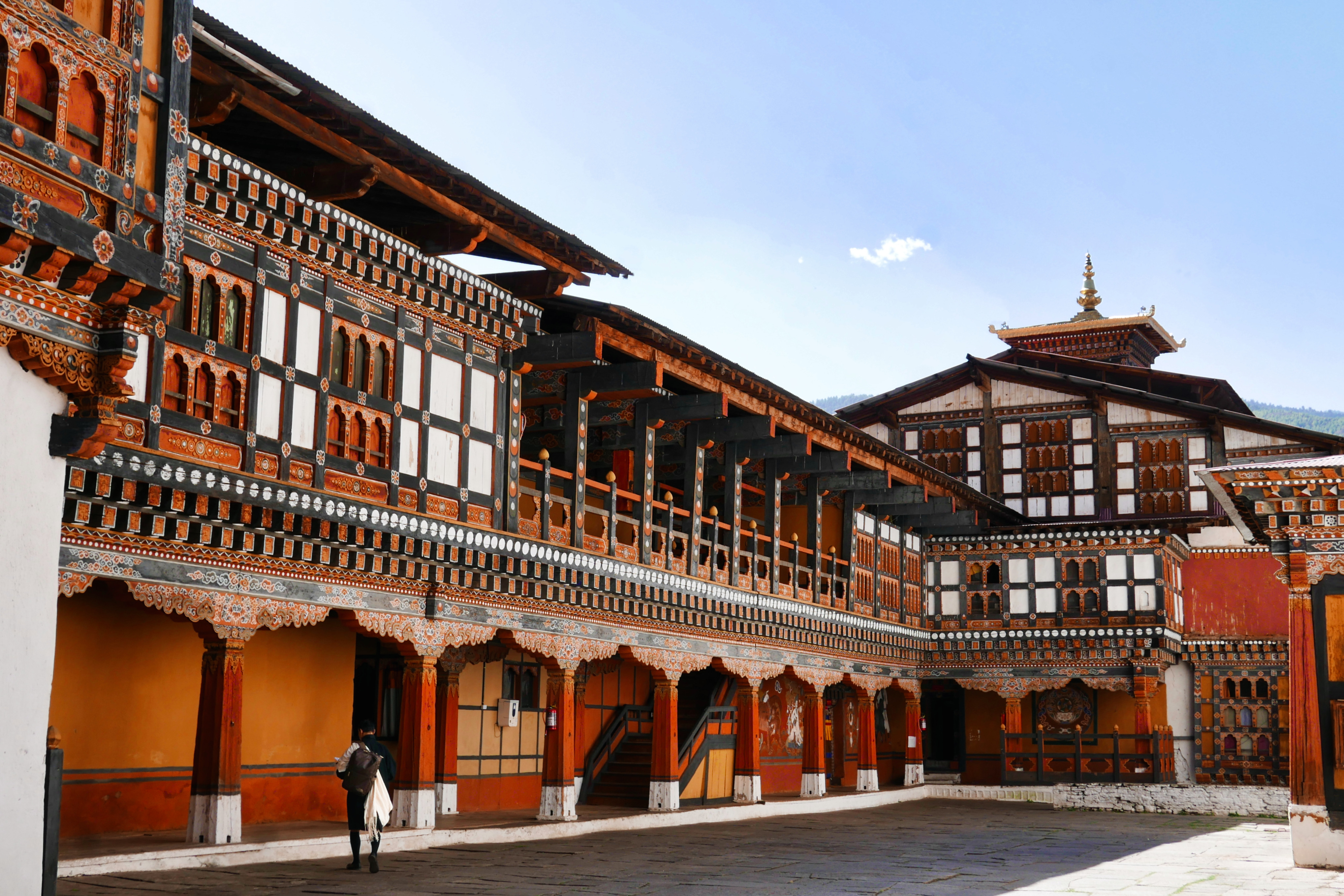
Before hiking the incredible Taktsang on the penultimate day, my body needs some training to adapt to the high altitude first. Thus, on day two, U.D. led me to Paro Dzong – a massive fortress-monastery built atop a rugged limestone hill. It was a 20-minute walk up a flight of steep stairs, yet it already made me gasp for air. Not only because of the hike, but because the views there were literally breathtaking. Stretching as far as the mountains, the rice paddies glowed in multiple shades of gold during the harvest season. It complemented the whitewashed farmhouses and the quaint town of Paro, distinctive for its colorful, ornate shopfronts.
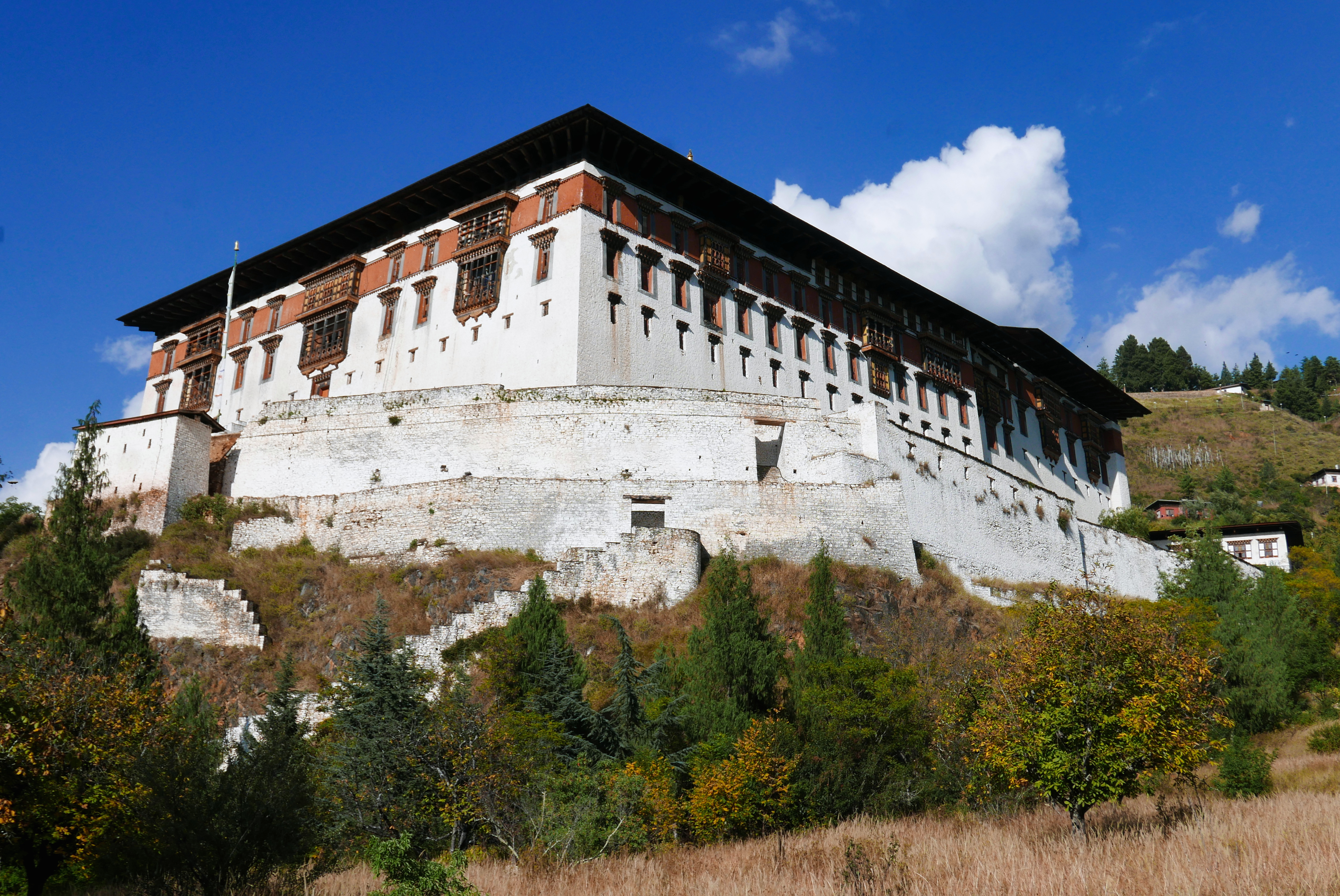
An outstanding example of Bhutanese traditional architecture.
The dzong itself is an architectural masterpiece, featuring a large central tower topped by a gold-plated roof, lofty entry doors, and high stone walls with little to no windows in the lower sections. A belt of red ochre runs across the top of the white walls, punctuated by intricate timber windows. Inside the walls is a series of cobblestoned courtyards, framed by elaborate, brightly colored woodwork. All are fitted together using simple timber joinery techniques instead of nails and screws, and adorned with Tibetan Buddhist art. A wooden covered bridge called Nyamai Zam currently links the dzong to the town center; however, in the past, a deep moat and a drawbridge provided extra protection.
Officially known as Rinpung Dzong, this fortress-monastery has served as Paro’s monastic body and government offices since the mid-17th century. Although the original rammed-earth structure was built much earlier, the dzong got its current appearance under Ngawang Namgyal (1594–1651), the founder of a unified Bhutan. According to local legend, Guru Rinpoche – Bhutan’s most venerated religious figure – visited this limestone hill in the 8th century. He prophesied that it would one day become the foundation of a great dzong and dubbed it “Rinpung Drak”, meaning “cliff of the heap of jewels”, from which the official name came.



2. National Museum of Bhutan
Standing tall above Paro Dzong is a nearly circular structure called Ta Dzong, meaning “watchtower”, erected a couple of years after the main fortress. Though its primary function was monitoring the valley for potential invasions, the tower also served as food storage, ammunition depots, and even a redoubt in case Paro Dzong fell, thanks to its one-of-a-kind design.
At first glance, one might mistake Ta Dzong for being built from two concentric rings of stone walls, fortified with arrow loops and oriel windows. But a closer look reveals a circular inner wall embraced by a crescent-shaped outer wall — a union of the sun and the moon, which is considered an emblem of victory. These walls separate the tower into a cylindrical inner chamber and an outer space, which timber beams further divide into seven floors. Interestingly, the outer wall only wrapped around the core’s first three levels, leaving one-third of it exposed on the western facade.
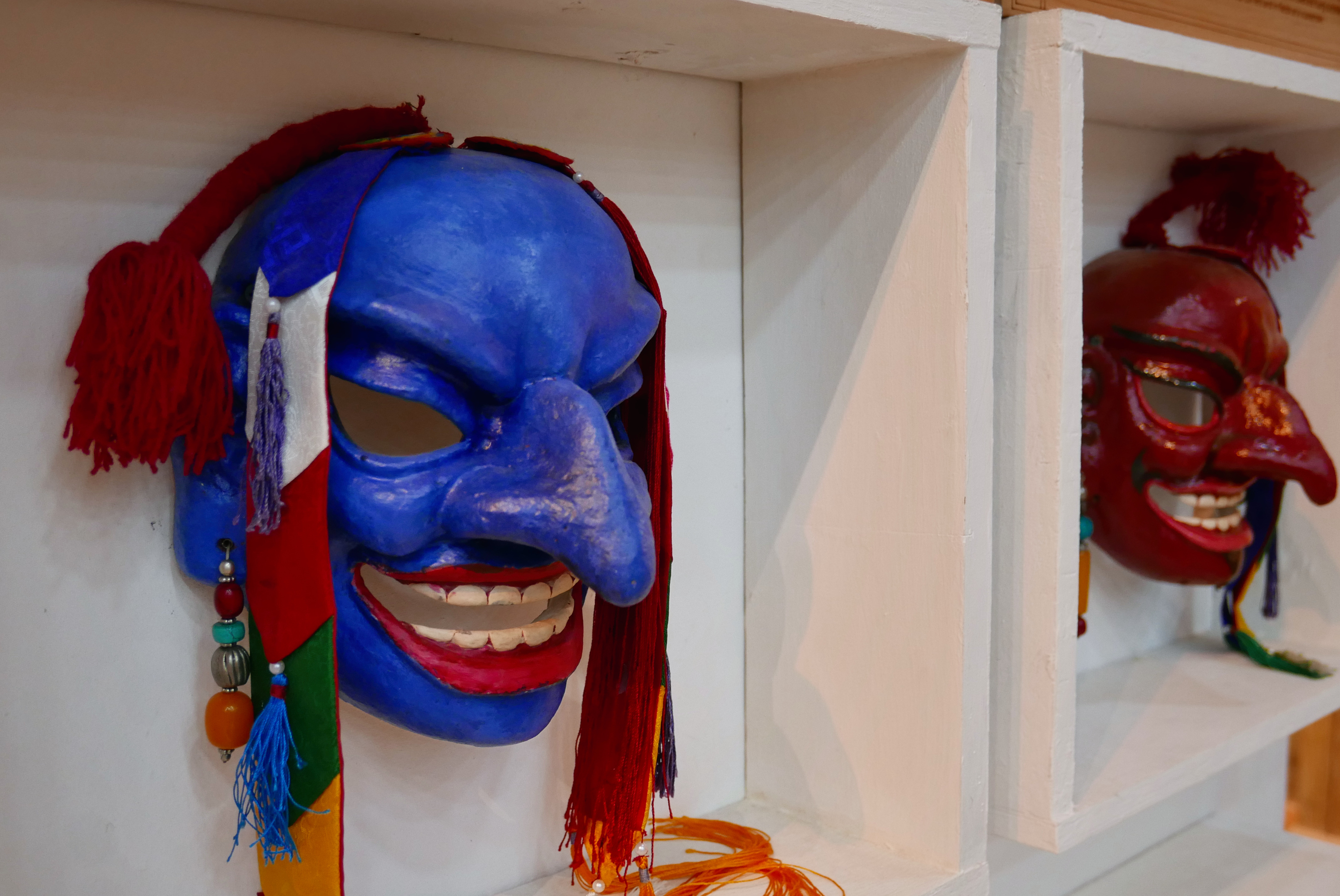
By the 18th century, Ta Dzong became obsolete as Bhutan enjoyed a prolonged period of peace. The tower fell into ruin before being converted into the National Museum of Bhutan in 1968. Since then, the museum has showcased numerous cultural treasures, from everyday items like vessels, textiles, and farming tools to jewelry and royal artifacts. Highlights include a fine collection of thangka paintings, sacred relics, and a three-dimensional clay sculptural mandala depicting an assembly of Buddhas, bodhisattvas, spiritual masters, and deities from the four main sects of Tibetan Buddhism.
A watchtower turns into a unique museum.


3. Paro Taktsang
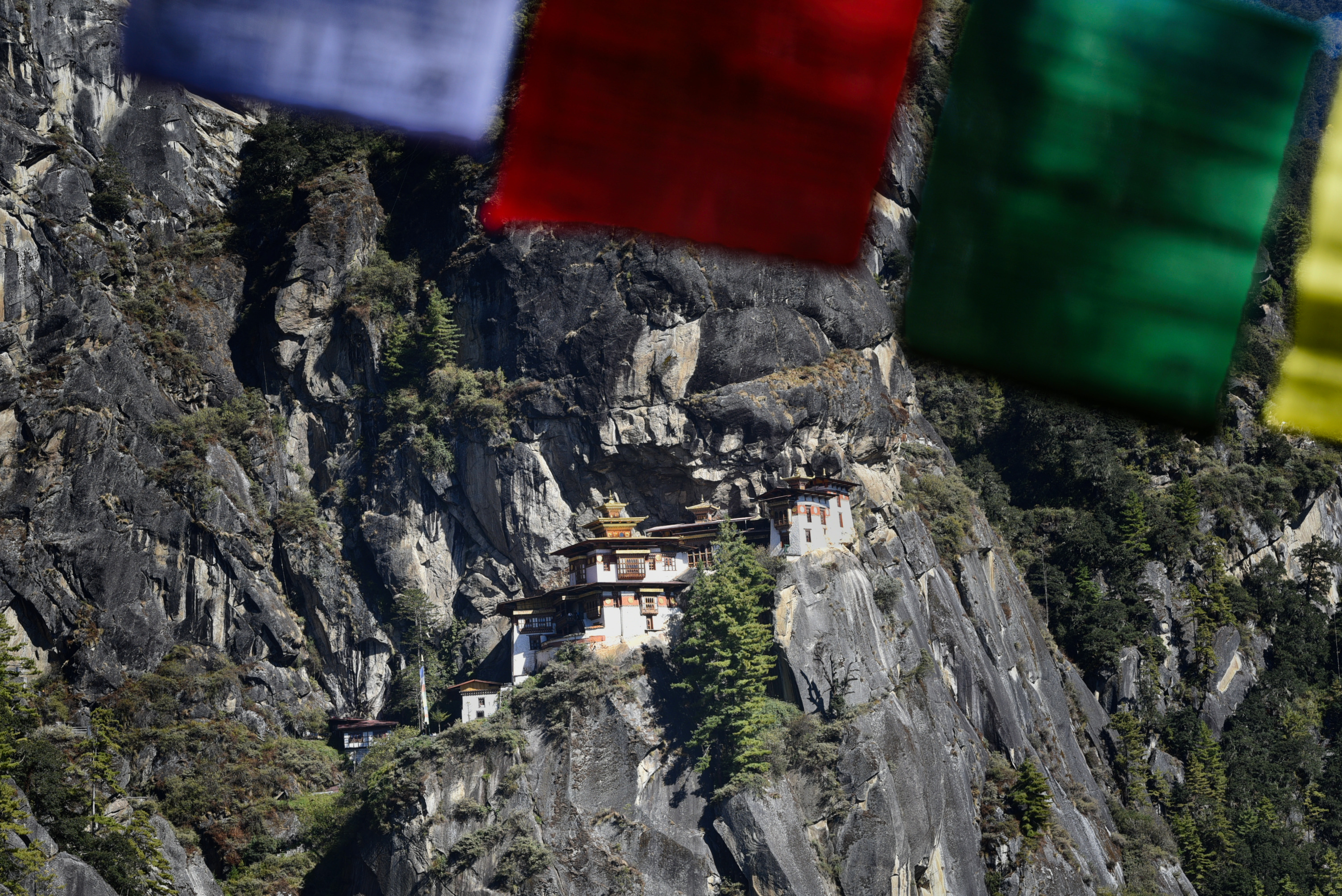
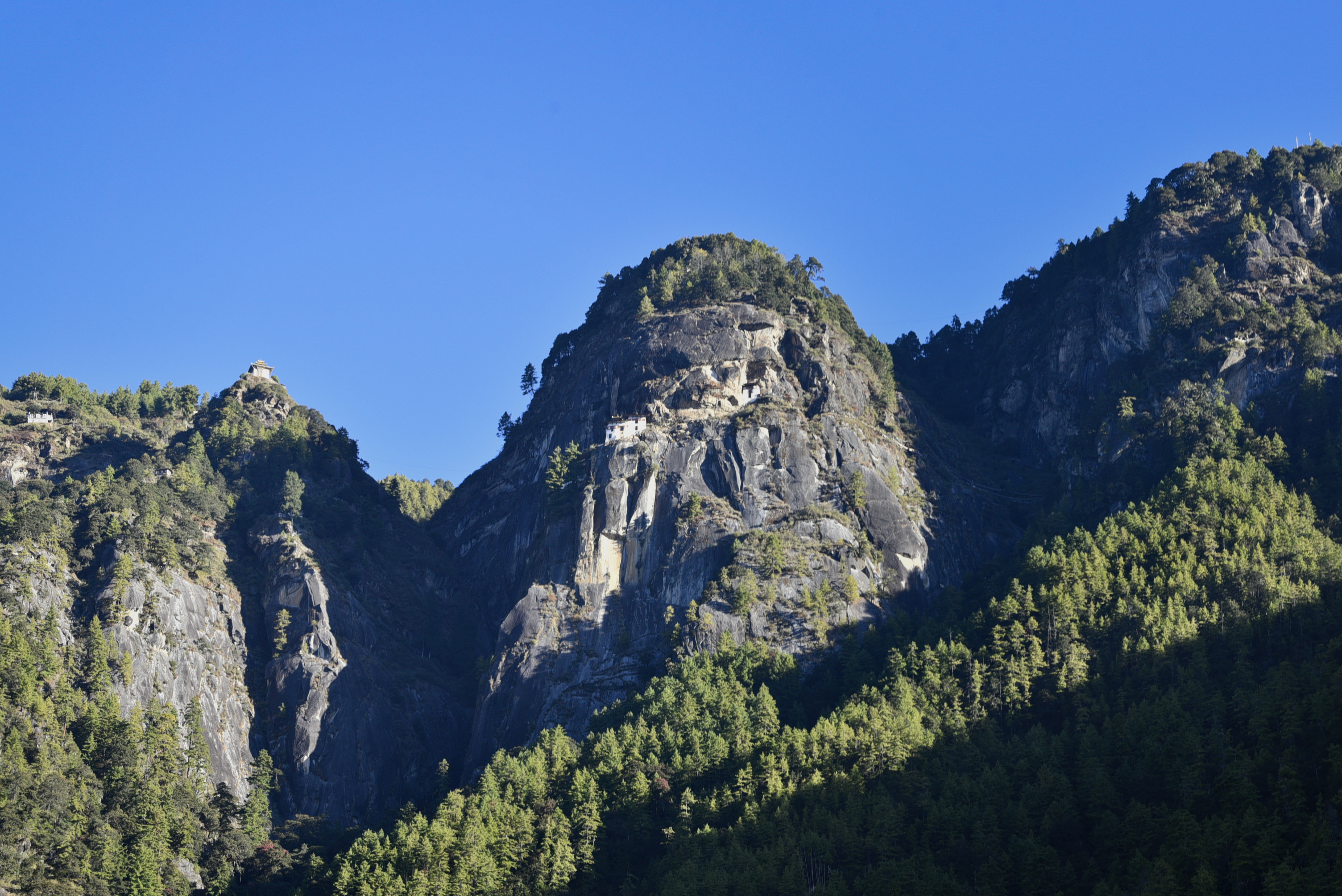
Anchored against the sheer cliff face, Paro Taktsang is Bhutan’s most famous sight and one of its holiest.
After a few more strenuous walks in Punakha and Gangtey, I was ready for the most challenging hike of my Bhutan trip: the iconic Tiger’s Nest Monastery, perched atop sheer cliffs 900 meters above the valley floor. It’s believed that Guru Rinpoche, or Padmasambhava, flew here from Tibet in the 8th century on the back of a mystical tigress. He meditated in a cave before spreading Buddhism across the kingdom. Over the next centuries, many other holy men followed suit, and by 1692, Bhutan’s ruler, Gyalse Tenzin Rabgye (1638-1696), constructed a monastery complex around the sacred cave. Since then, Taktsang has become the country’s most revered site, with numerous miracles associated with it.
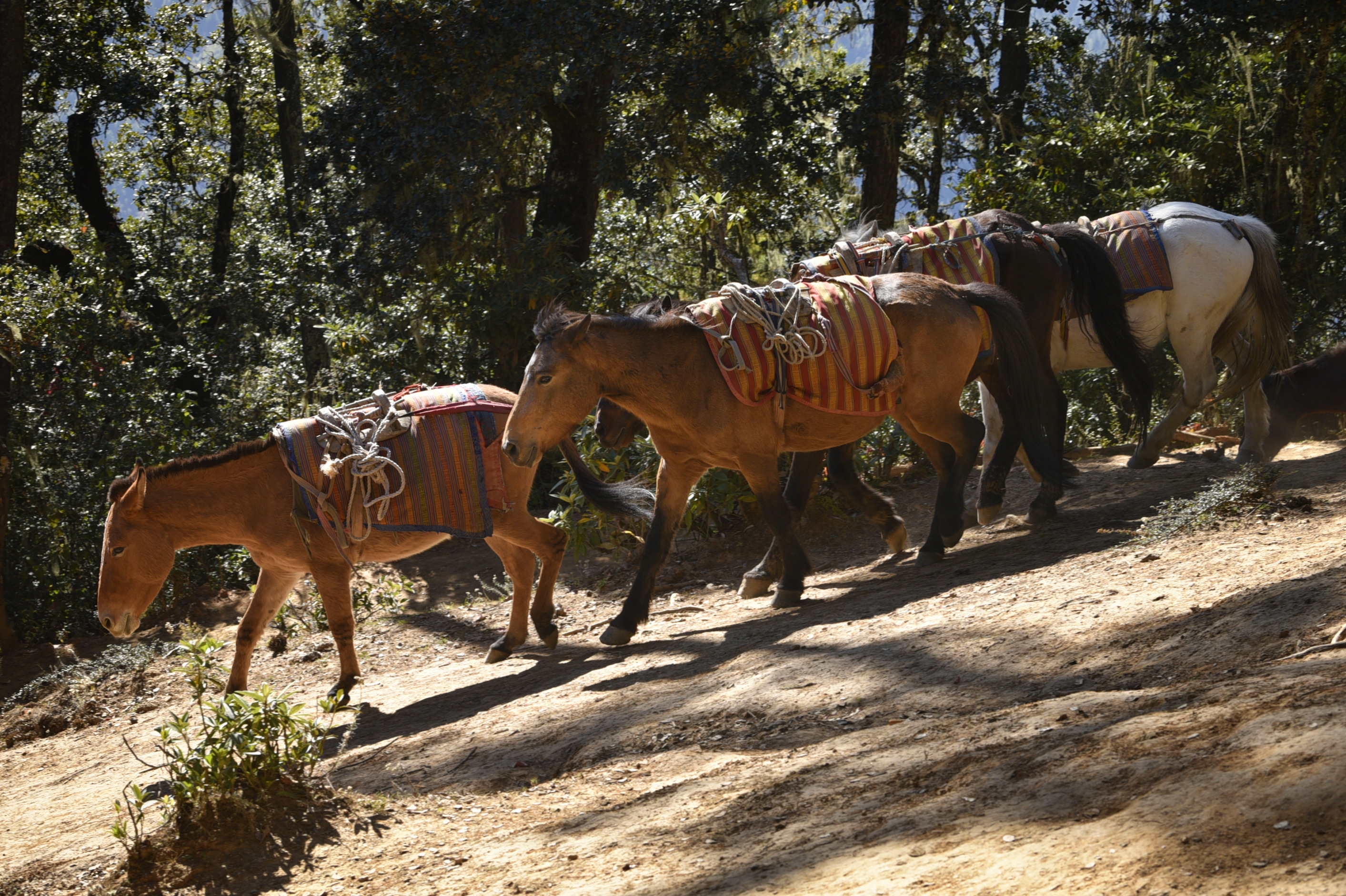
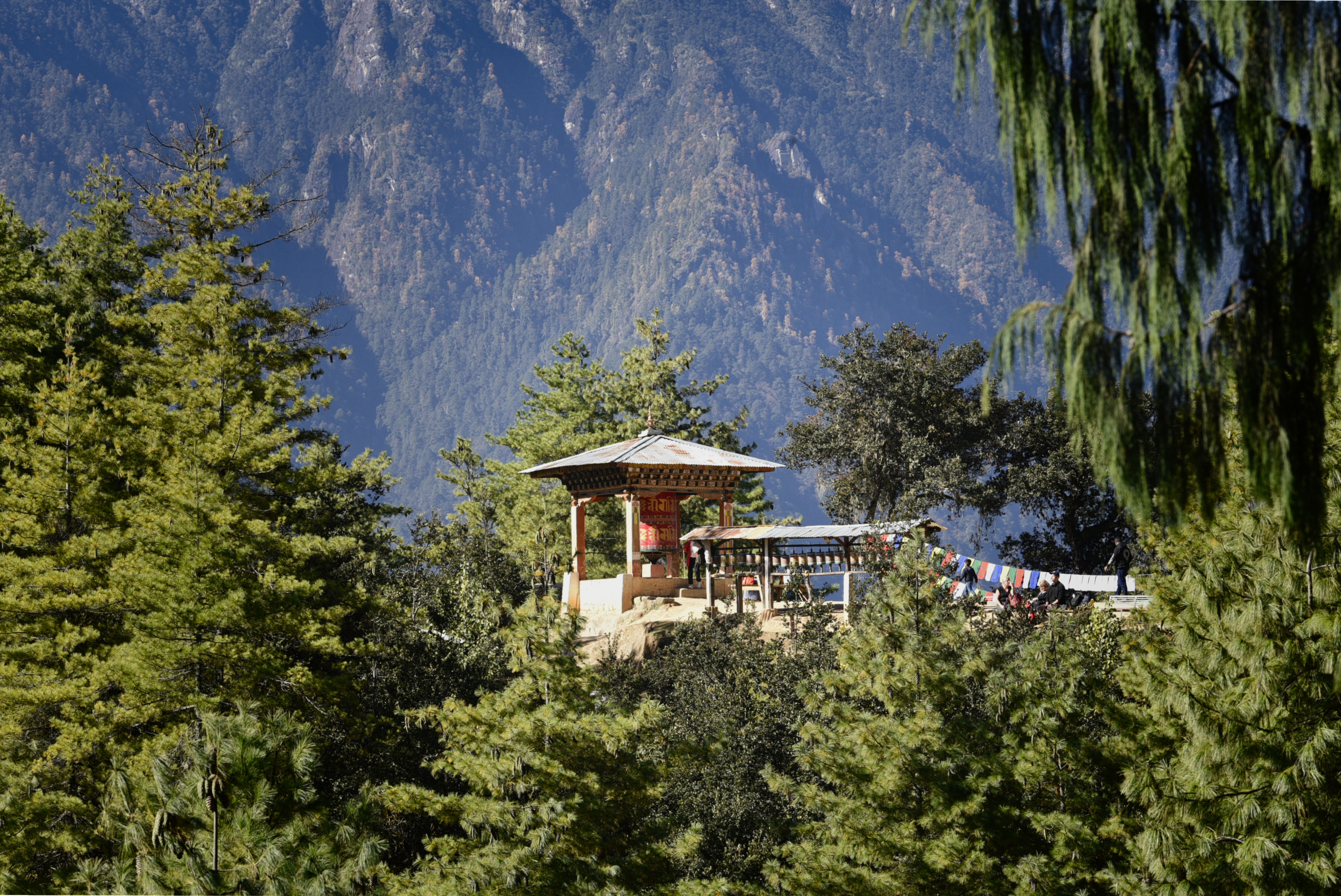
“Up there!” U.D. pointed to a bright spot on the grey rock surface. I squinted my eyes but could barely recognise Paro Taktsang from the starting point. We started the hike at dawn, followed a steep dirt trail crisscrossed with tree roots and fluttering prayer flags toward the cliffside monastery, with U.D. keeping a watchful eye on me. It was a bit chilly in the early morning, but the woodland scenery was nothing short of magical: a sea of pine trees stretching into the high mountains beneath a cerulean blue sky; curtains of celadon green lichen draping ancient trees. Punctuated among them were colorful shrines and prayer wheels, as well as gold and red leaves, signaling autumn’s arrival in this forest.
The hike itself wasn’t technically difficult, but more like a test of endurance, involving thousands of steps. After about two hours, we passed through the dense forest and emerged on the edge of a rocky chasm. There, the Tiger Monastery stood like a mirage. It anchored against the sheer cliff face, defying gravity and logic. The secluded hermitage displays a traditional style, with whitewashed walls and gold-plated roofs. It consists of about seven structures carved around a series of sacred caves and linked together by vertiginous rock-cut paths and wooden bridges. Although what we see today is an extensive reconstruction of the original temple, which was unfortunately destroyed by fire in 1998, it still reflects the Bhutanese’s exceptional skill and spiritual faith.
Inside the Secluded Hermitage
My challenge, however, didn’t end at the viewpoint. To reach the monastery’s entrance, I must first descend a dreadful flight of stairs and then climb back up on even steeper steps on the other side, passing by a trickling waterfall. Electronic devices, like cameras and phones, are not allowed beyond this point to safeguard the site’s sanctity and secrecy.
Upon entering, the first thing that hit me was the scent of yak-butter lamps, more grounded and present than I have ever felt. It mingled with a baritone hum rolling through the cold, smooth, cobbled passageways as people, young and old, murmured under their breath. Some chanted mantras, while others whispered as they moved through darkened meditation retreats and prayer halls covered with Tibetan Buddhist iconography. The holy cave where Guru Rinpoche meditated was also there, but it was open to the public only once a year, on the last day of the fifth month in the lunar calendar. Occasionally, a clear chime resonated through the monastery as ochre-red-robed monks bestowed blessings on pilgrims and perhaps anyone who completed this hike.
Back in the parking area, my phone stats indicated that I’d walked almost 13 km in three-and-a-quarter hours, climbing more than 18,000 steps. My neck and legs were protesting and urgently needed the legendary Bhutanese hot-stone massage. But I felt accomplished and blissful to see such a masterpiece with my own eyes: enshrouded in myths, made by humans and protected by nature.
A mythical monastery made by humans and protected by nature.




You had a better luck with the weather in Paro than I did. So, it’s actually really nice for me to see your photos of this highly photogenic part of Bhutan as they bring a lot of fond memories but with better colors. You’re lucky that the National Museum was open when you went. I think it was under renovation when James and I were there.