
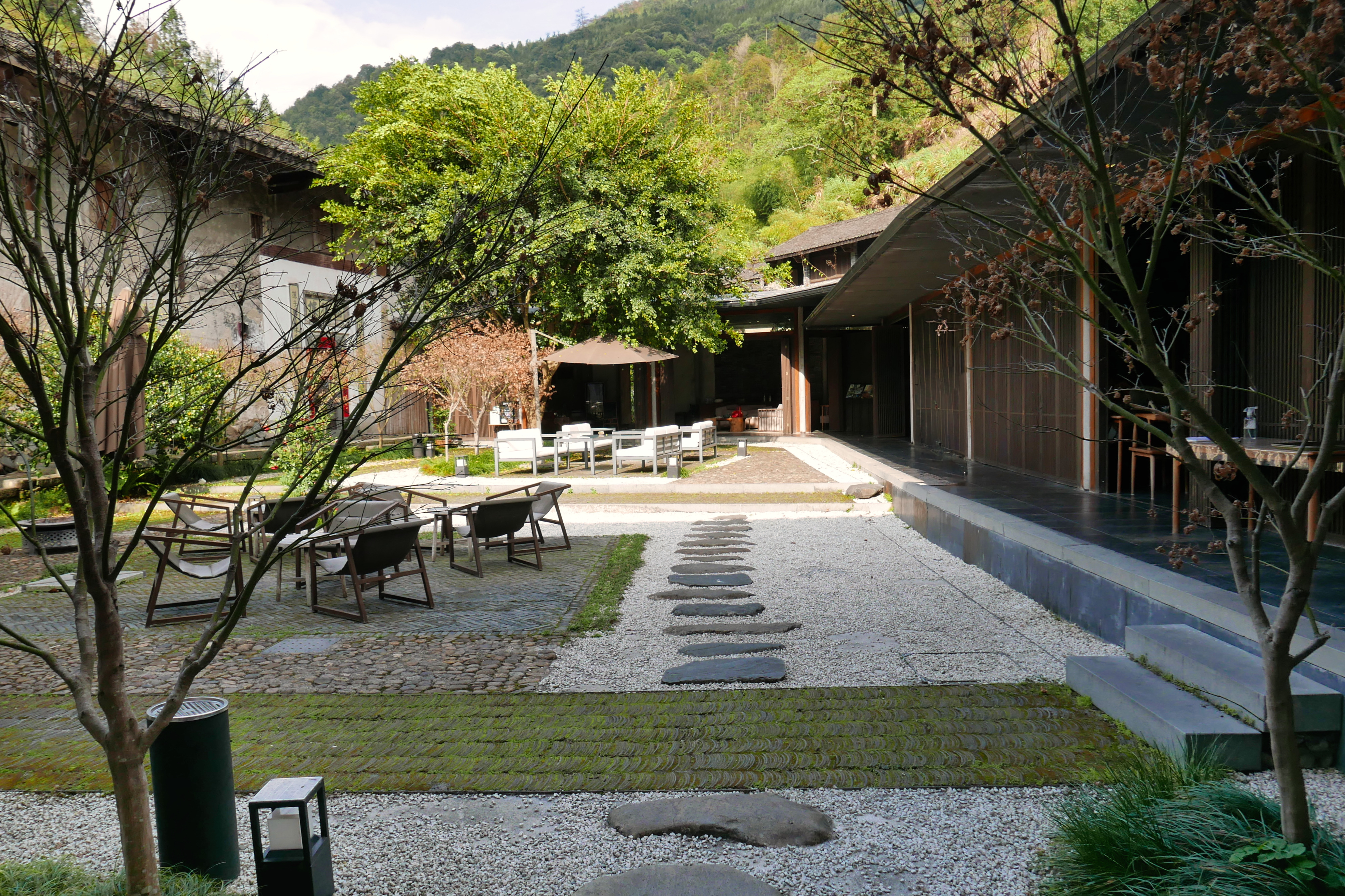
Occupying a cluster of Fujian earthen houses, Tsingpu Tulou Retreat invites guests to immerse themselves in the beauty of rural China and the vibrant Hakka culture—all while indulging in the comforts of modern luxury.
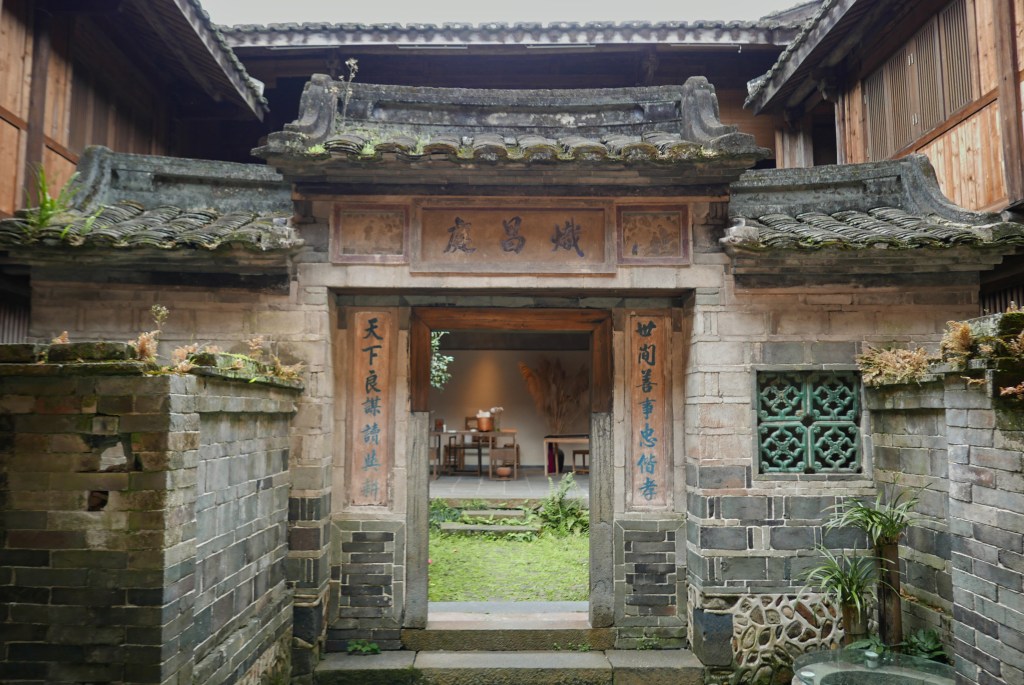
“Is this the way to the hotel?” I mused as I stood before a narrow cobbled path with a gentle stream flowing by its side. The absence of signs or markers left me feeling uncertain, though, to be fair, my limited Chinese might have been the reason. After a few moments of hesitation, I ventured the path until reaching a time-worn stone doorway adorned with floral carvings and intricate calligraphy. It opens onto a serene courtyard and a simple reception area where the friendly staff greeted me with steaming ginger tea and delectable snacks, instantly making me feel at home.
Situated in the heart of the tulou country, Tsingpu Tulou Retreat is one of the two boutique resorts founded by Wang Gong Quan, a real estate mogul and liberal activist. He established these resorts to preserve Chinese traditional aesthetics and culture by transforming rural properties into stylish hideaways full of local characteristics. Tsingpu Tulou Retreat, in particular, involved the meticulous renovation of a complex of five derelict earthen houses, creating an oasis of contemporary luxury yet steeped in the vibrant culture of the Hakka ethnic minority.

The Architecture
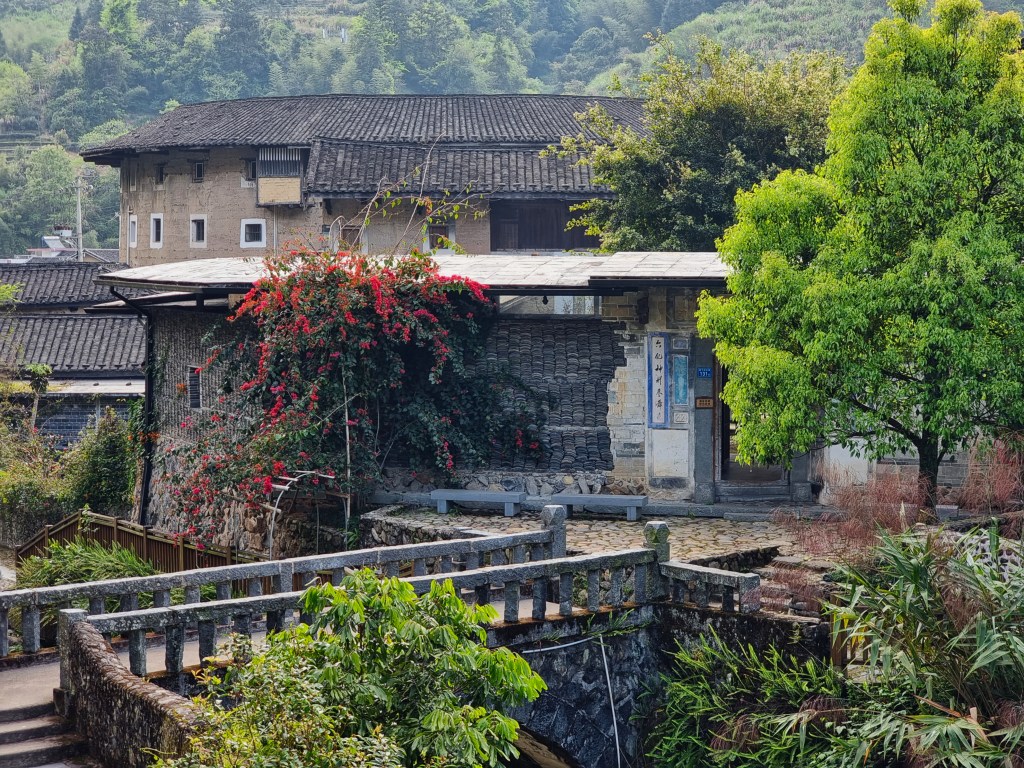
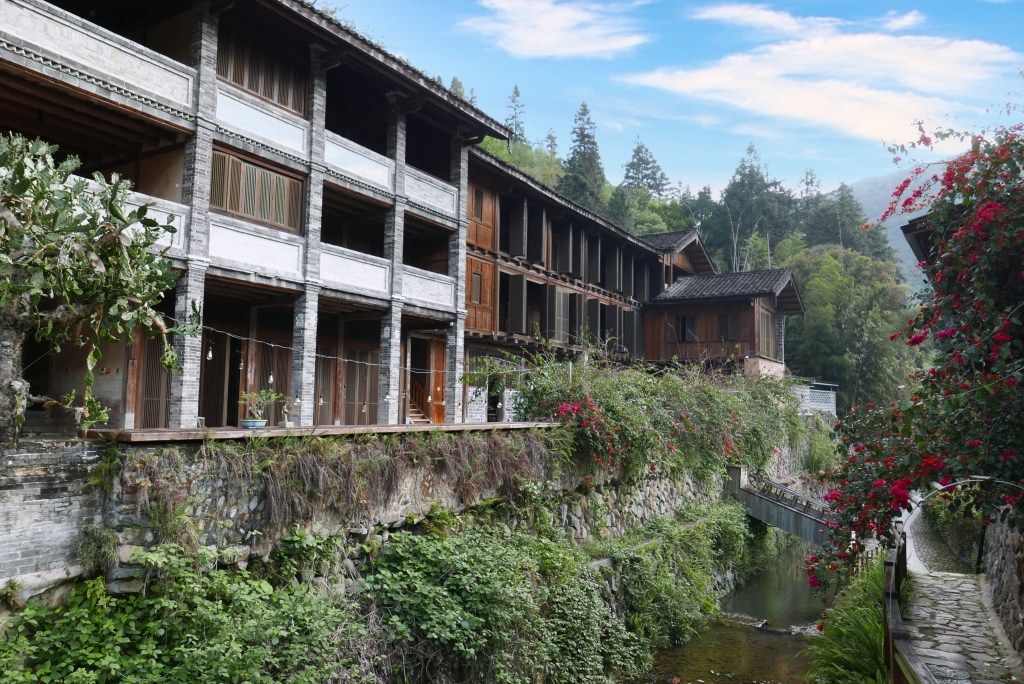
Renowned architect Hua Li breathed new life into five Fujian earthen structures that were on the point of demolition. He skillfully reused parts of the existing houses with a few thoughtful additions, making the entire complex resemble a large Chinese residence containing multiple courtyards. The layout adheres to local traditions, with rooms, lounges, and other communal spaces around central courtyards. It strikes a balance between public areas and guest rooms, allowing for ample natural light in the rooms while maintaining privacy and scenic views.
Regarding decor, Tsingpu Tulou Retreat showcases modern vibes with traditional touches. Reclaimed timbers, stone bases, and brickworks salvaged from the old houses were used throughout the renovations to ensure an aged aesthetic. Discarded curving roof tiles, on the other hand, were re-purposed into wall features, accentuating the resort’s original character. Meanwhile, the furniture was carefully selected to match the tones and textures of the weathered surfaces. Each piece, though modern in appearance, reflects a strong sense of traditional craftsmanship.



The Room
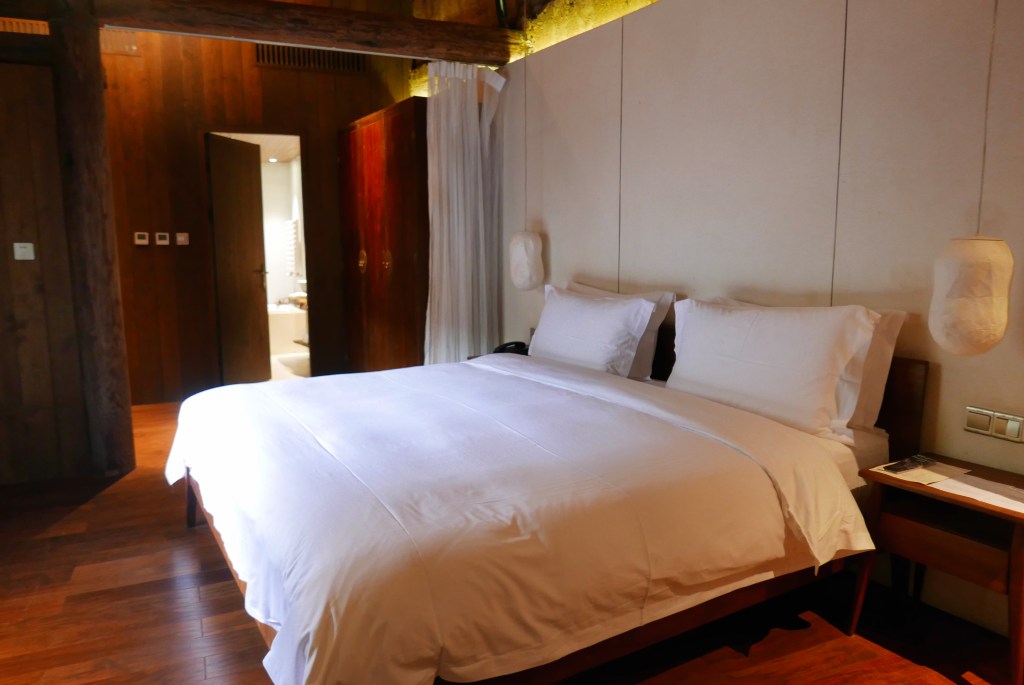
Each of the 24 rooms at Tsingpu Tulou Retreat is an elegant reinterpretation of the traditional tulou’s apartments. It’s mainly made of wood and features minimalist furniture, modern amenities, and a natural color palette, with lovely views of the courtyards or the surrounding mountain landscape. The room includes a sleek bathroom at one end, with heated flooring, double sinks, a bathtub, and a glass-enclosed shower.
Despite its contemporary design, Chinese accents are subtly incorporated throughout the space, from cocoon-like lamps crafted from paper and hemp cloth that provide a soft glow to the exposed wooden beams that add character and authenticity. The room’s height and layout also match those of the original buildings, thanks in part to the preservation of the gabled mudbrick walls.

The Food
From delightful breakfasts to multi-course dinners, meals at Tsingpu Tulou Retreat are served in a classy dining hall that blends seamlessly with the adjoining original structures. Its partition walls have all been removed, giving way to elegant bi-folding wooden lattice façades that can open to the breathtaking central courtyard.
Here, guests can enjoy authentic Hakka dishes known for their light, fresh, and umami-rich flavors. Each season brings a new, irresistible menu crafted from fresh local ingredients. Think of smoked duck salad, soup with lotus root and chicken, braised pork belly in medicinal herbs and rice wine, and stir-fried bamboo shoots, among other delicacies.


On the Doorstep
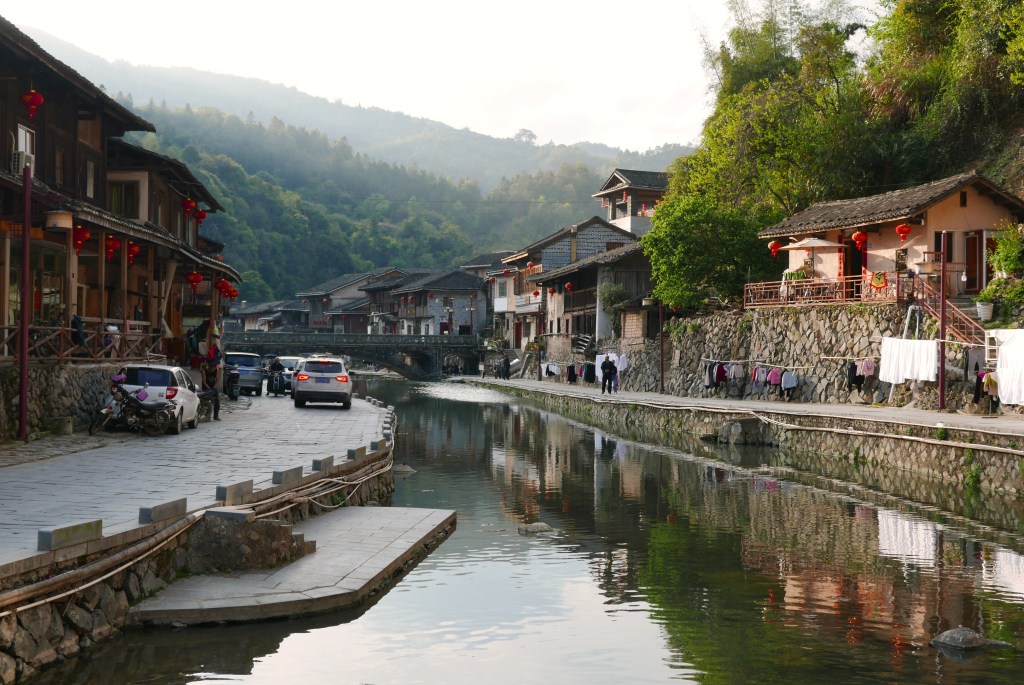
Tsingpu Tulou Retreat is part of Taxia, a 700-year-old hamlet within the UNESCO-listed Tianluokeng Tulou Cluster. The village is embraced by forested peaks, with foothills chiseled with terraced rice paddies, tea, and tobacco fields. Dozens of well-preserved tulou and historic houses line the banks of the river that winds through the village’s center, creating an idyllic countryside where humans and nature coexist in harmony.
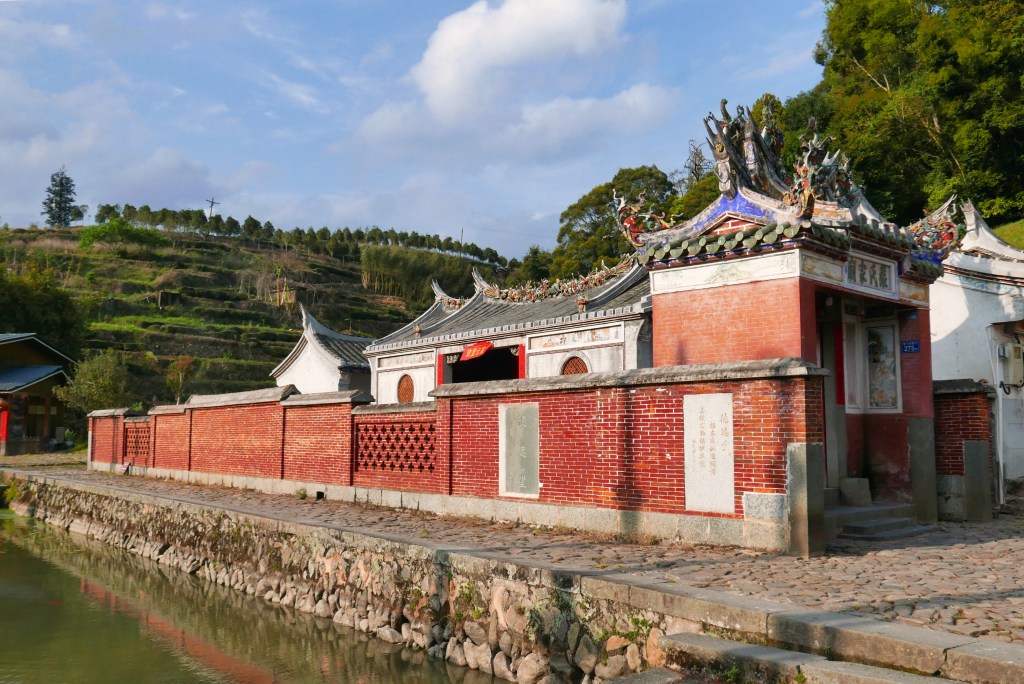
In addition to the tulou, a notable structure in Taxia is the Deyuan Hall. The hall is one of Fujian’s most well-preserved ancestral halls, built during the late Ming and early Qing dynasties to honor the Zhang clan. It showcases typical Hakka architecture, featuring brick outer walls, upward-curving roof ridges, and vibrant cut-porcelain decorations. Lying in front of the hall is a half-moon pond adorned with 24 impressive stone flagpoles erected to commemorate outstanding clan members and their contributions to the hometown.
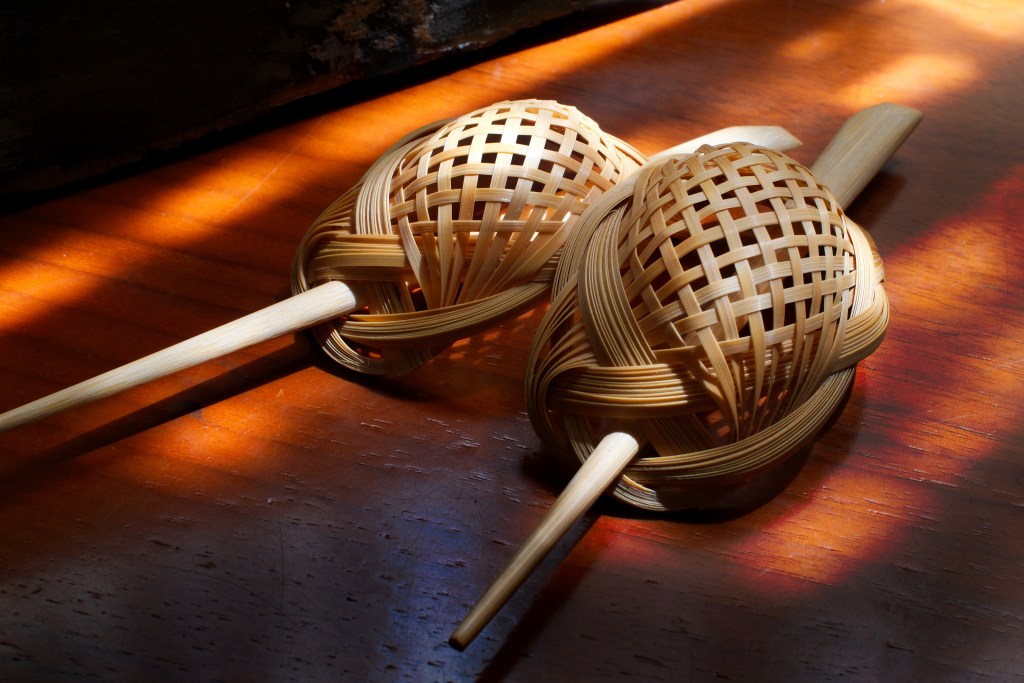
For guests who prefer to stay on the premises, there is an array of classes and activities to participate in where they can learn more about the Hakka culture, ranging from pottery, calligraphy, painting the tulou, pottery, and brewing aromatic teas, to making hair ornaments from bamboo. Local artisans and villagers led these activities, ensuring guests enjoy the most authentic experiences.
Taxia is a 700-year-old hamlet embraced by forested peaks.


Practical Information
- At the time of writing, international travelers can book Tsingpu Tulou Retreat via Trip.com – a popular Chinese booking portal. Room rate includes half-board, non-alcoholic drinks, and in-house activities.
- Due to its location within the Tianluokeng Tulou Cluster Scenic Area, visitors have to pay an admission fee of 90 CNY to enter Taxia, and thus Tsingpu Tulou Retreat. It’s acceptable for a short vacation, but it might be cumbersome for guests who want to stay longer.
DISCLAIMER:
This post is written based on my personal experience. It was neither sponsored nor solicited by Tsingpu Tulou Retreat or any third party. All texts and pictures reflect my own opinions and are provided solely for informational purposes. I will not be liable for any errors or damages by using this information.


You always stay at interesting places, but this kind hotel in Fujian is really the kind of accommodation I usually find myself drawn into. I’m all for preserving traditional architecture through an adaptive reuse of the space.
We have the same taste, Bama 🙂 How are you doing? It has been a year since I hit the “publish” button again. I guess there are many posts on your blog to catch up 😛
I think we do. 🙂 Work has been crazy lately, but I still manage to publish a new blog post every three weeks. Don’t worry about catching up with my blog! I noticed from your Instagram that you traveled to some parts of Asia and Europe in the past year, which is good.
I’m glad I made the trip last year. Otherwise, I would be stuck in the Middle East. Crazy how things have changed in just one year 🙁
A lovely write up of your stay at the Tsingpu Tulou Retreat in Fujian, Len. As you said, this place does sound like a blend of contemporary and traditional experience, from the architecture to the rooms and dining. The historic houses along the banks of the river through the village and the Deyuan Hall in the areas are quite something, preserved through the ages. It does seem a place where you can appreciate history authentic experiences while also feeling at ease with the hospitality on offer. Brilliant photography all round.
Many thanks for the kind words, Mabel! It’s nice to see you again after such a long time 🙂 This boutique hotel reflects a trend in China that I found quite nice, which is keeping the traditions alive in a modern setting.