

Just a couple of hours from Athens, the coastal town of Nafplio is a destination of timeless beauty. Once the capital of modern Greece, this seaside town now enchants visitors with beautiful houses, captivating waterfront, and not one but two impressive fortresses.
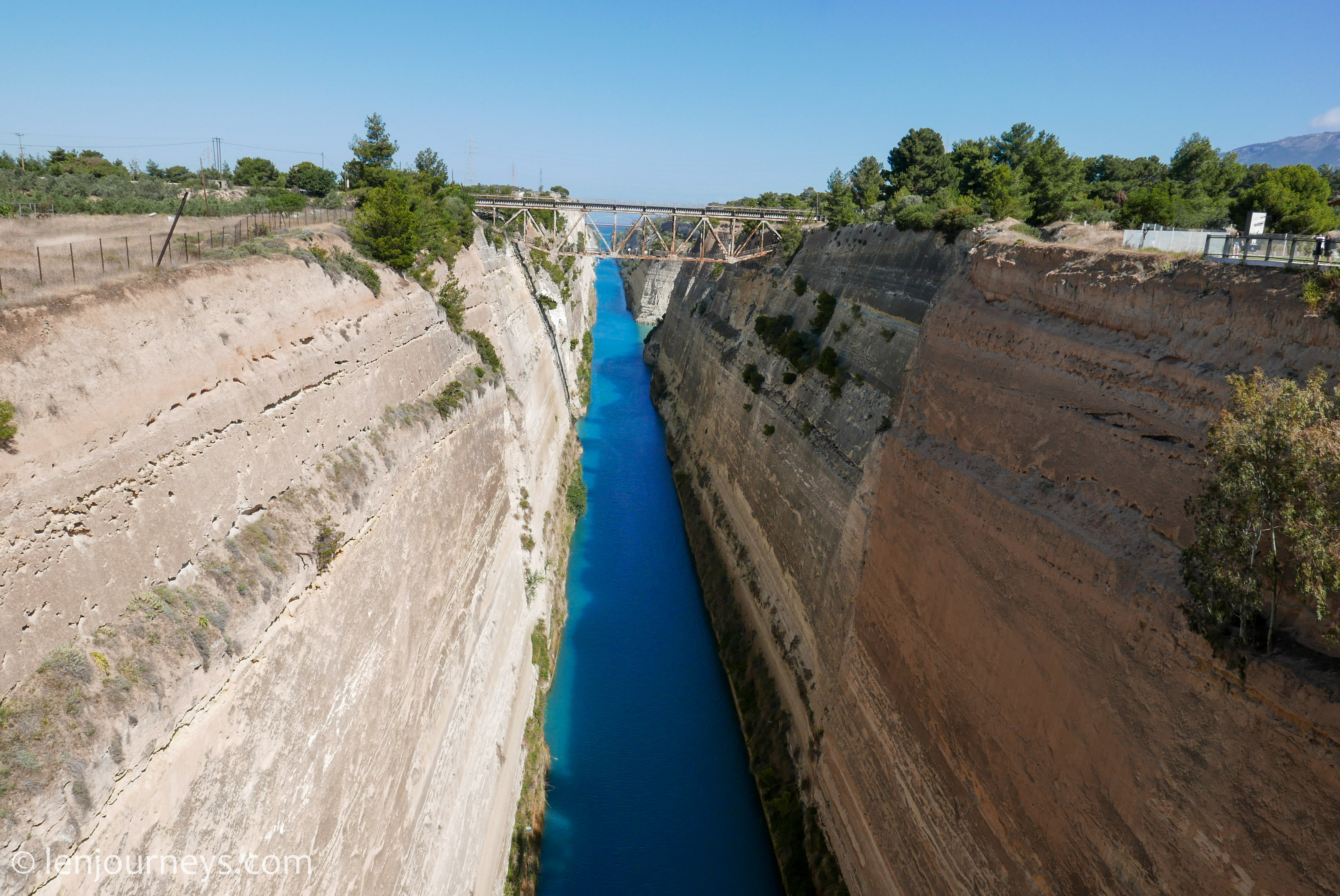
‘We are now in the Peloponnese! ‘ Jiani, my digilient driver, proudly informed me as we crossed the Corinth Canal. Though largely used by small cruise ships and tourist boats, this nearly 90-meter steep canal is indeed an engineering marvel. Completed by the late 19th century, it cuts through a massive limestone wall, connecting Greece’s two major bodies of water: the Ionian Sea and the Aegean Sea.
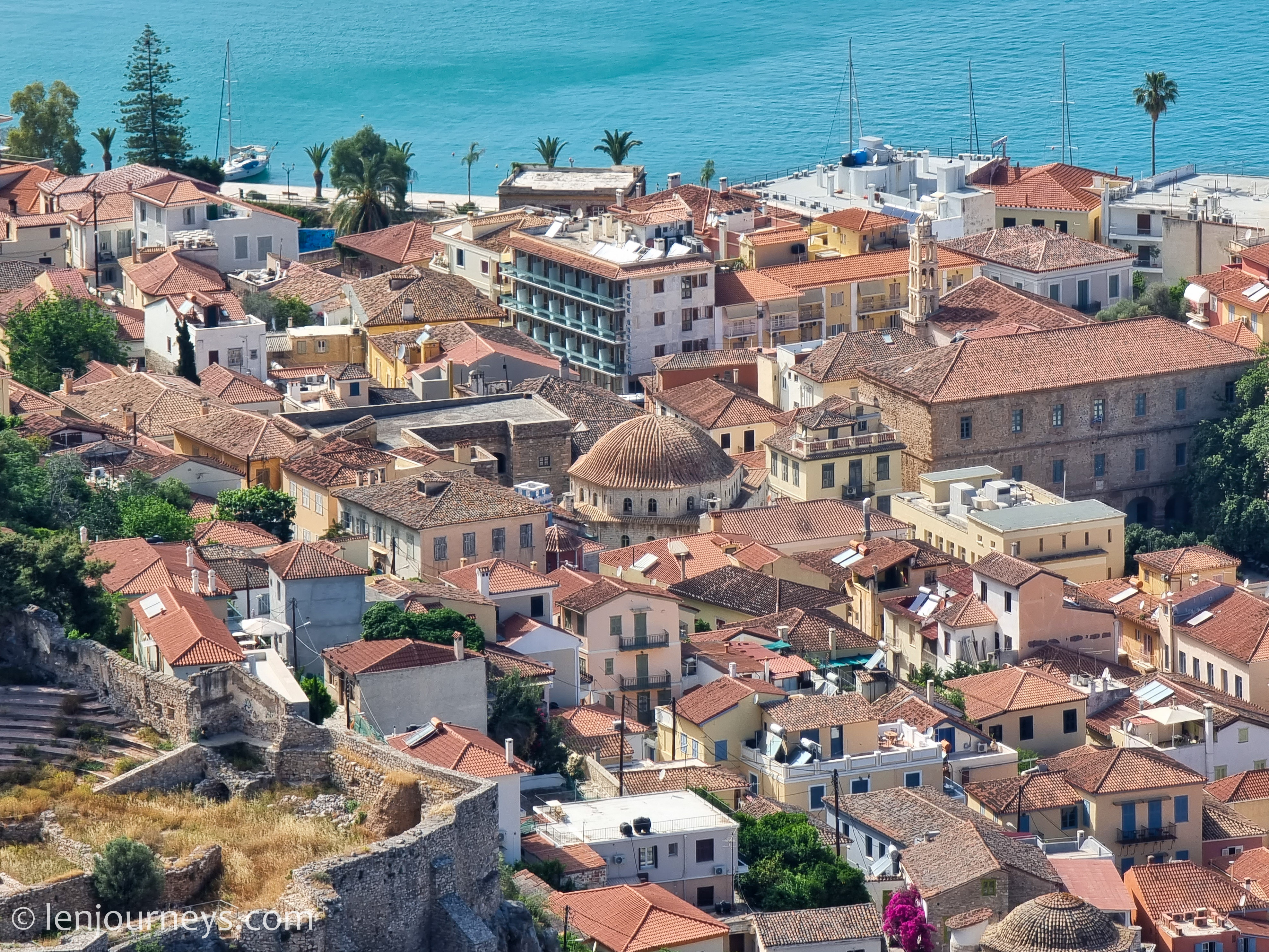
We were on the way to Nafplio, the kind of spot Athenians escape for the weekends. In contrast to the gritty capital, seaside Nafplio boasts an authentic, relaxed charm – rare to find in tourist hotspots like Mykonos or Santorini. Its old town is picturesque, featuring colourful neoclassical mansions, traditional churches, cobblestoned promenade, and two great fortresses perched above the cerulean blue sea.
1. Nafplio
Set on a rocky headland in the Peloponnese’s eastern part, Nafplio (also called Navplion and Nauplia) has been inhabited since antiquity. Its name is said to be derived from Nauplius, a mythological seafarer and the son of the Sea God, Poseidon. By the Middle Ages, Nafplio was among Greece’s most crucial seaports and thus an object of desire for the Byzantines, the Franks, the Venetians, and lastly the Turks. After the Greek War of Independence in 1829, the city became the capital of modern Greece for five years before the capital was moved to Athens.
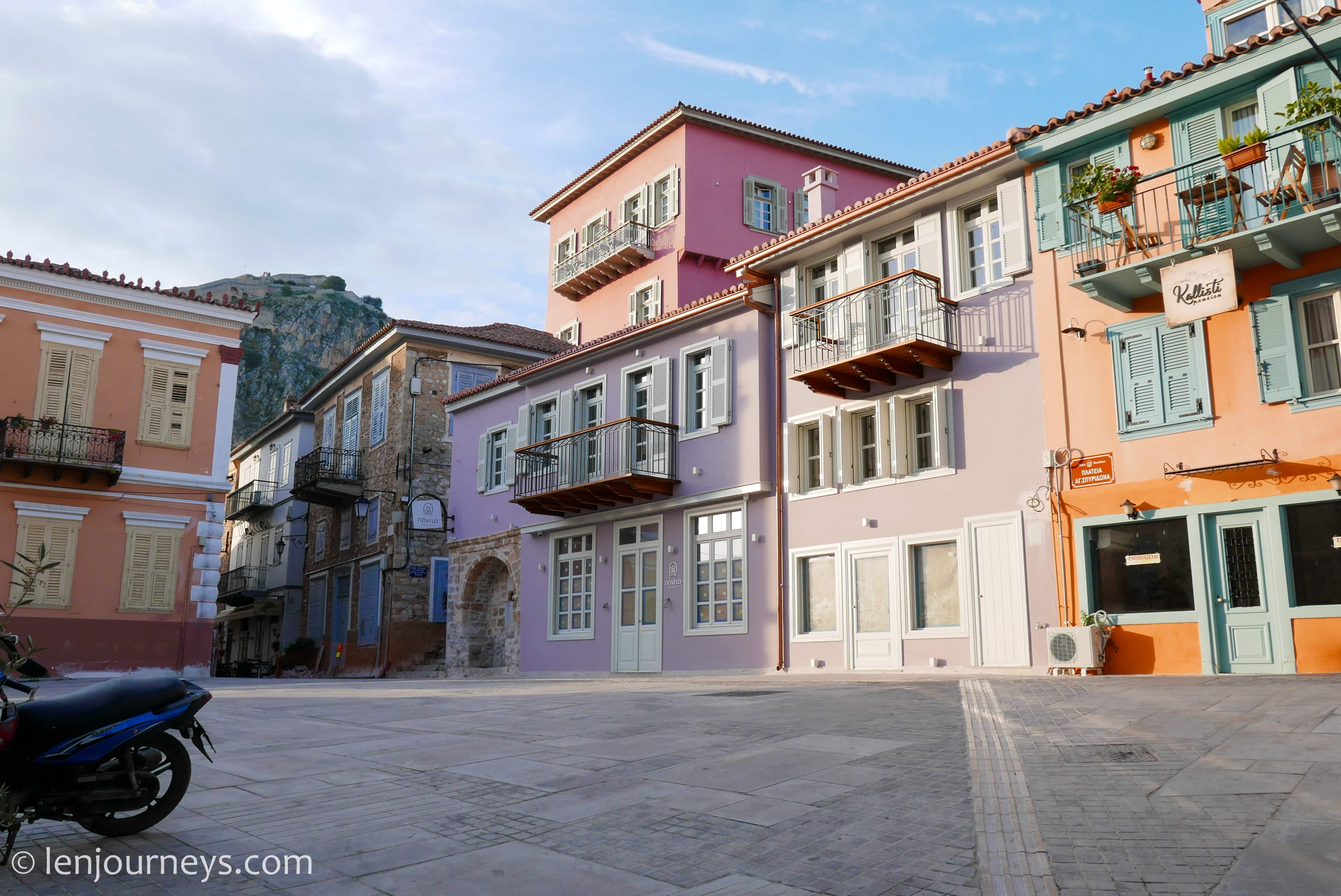
The significance of Nafplio as a port continues down to this day. Yet what draws visitors now is the timeless beauty of its townscape, where colourful houses in eclectic and neoclassical styles line the stone-cobbled alleys and squares. Their doors and windows are elaborately decorated with wrought iron, while their roofs are uniformly tiled with terracotta. Here and there, red and purple bougainvilleas add splashes of colour, enhancing Nafplio’s delightful scenery.


1.1 The Fortresses
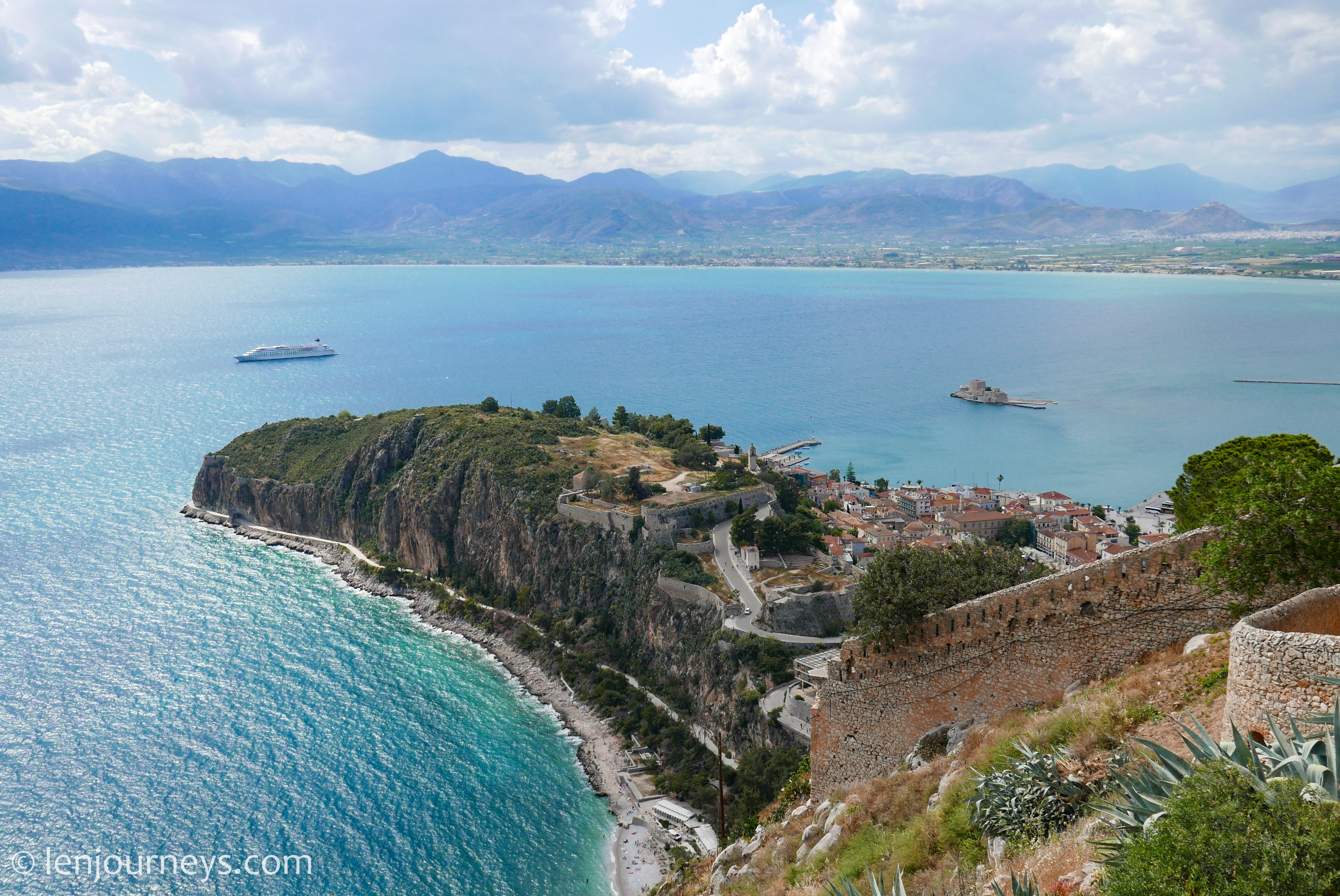
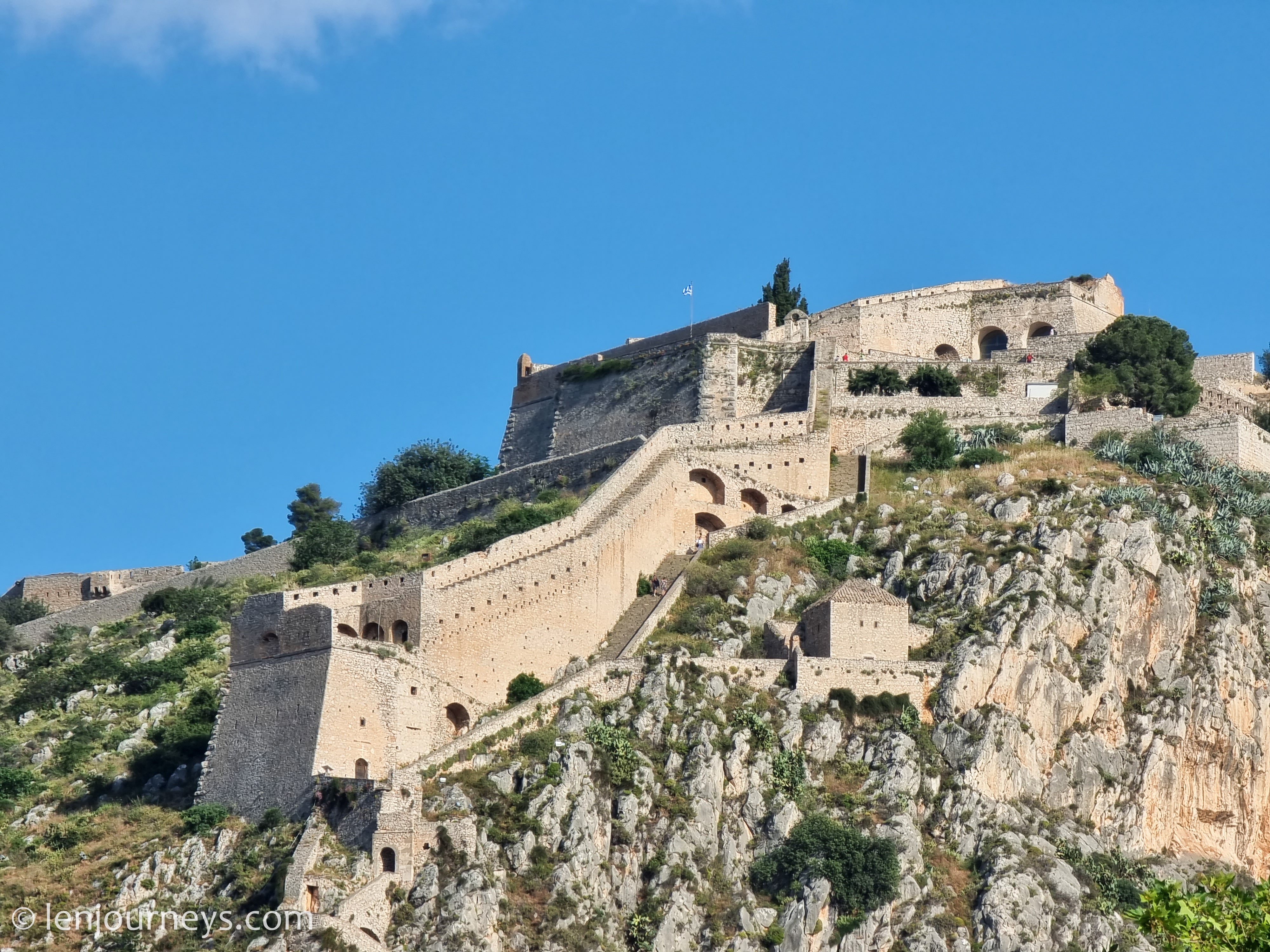
Dominating Nafplio’s skyline is Palamidi Fortress – an architectural wonder created by the Venetians in the early 18th century. It consists of eight mighty bastions, a series of stone ramparts, and, reputedly, 999 steps that zigzag down the towering cliff. Each bastion bore the name of a Greek hero and was designed to be self-sufficient, which means if one was breached, the other could still be defended. From the fortress, one can have a commanding view of the turquoise bay, the lush plains, and the mountains of Peloponnese.
Slightly closer to the town is Akronafplia – the town’s oldest fortress, dating as far as the Bronze Age. It was once the Acropolis of Nafplio, and a separate town until the 13th century. The arrival of the Venetians in the early 15th century led to the fort’s reconstruction. Specifically, it was integrated into the new defensive line, with an iron chain connecting it with Bourtzi – another fort located in the harbour, forming a barrier to prevent attacks from the sea. Thanks to its location right above the old town, one can enjoy a marvelous vista of Nafplio’s bright orange roofs.


1.2 The Harbour
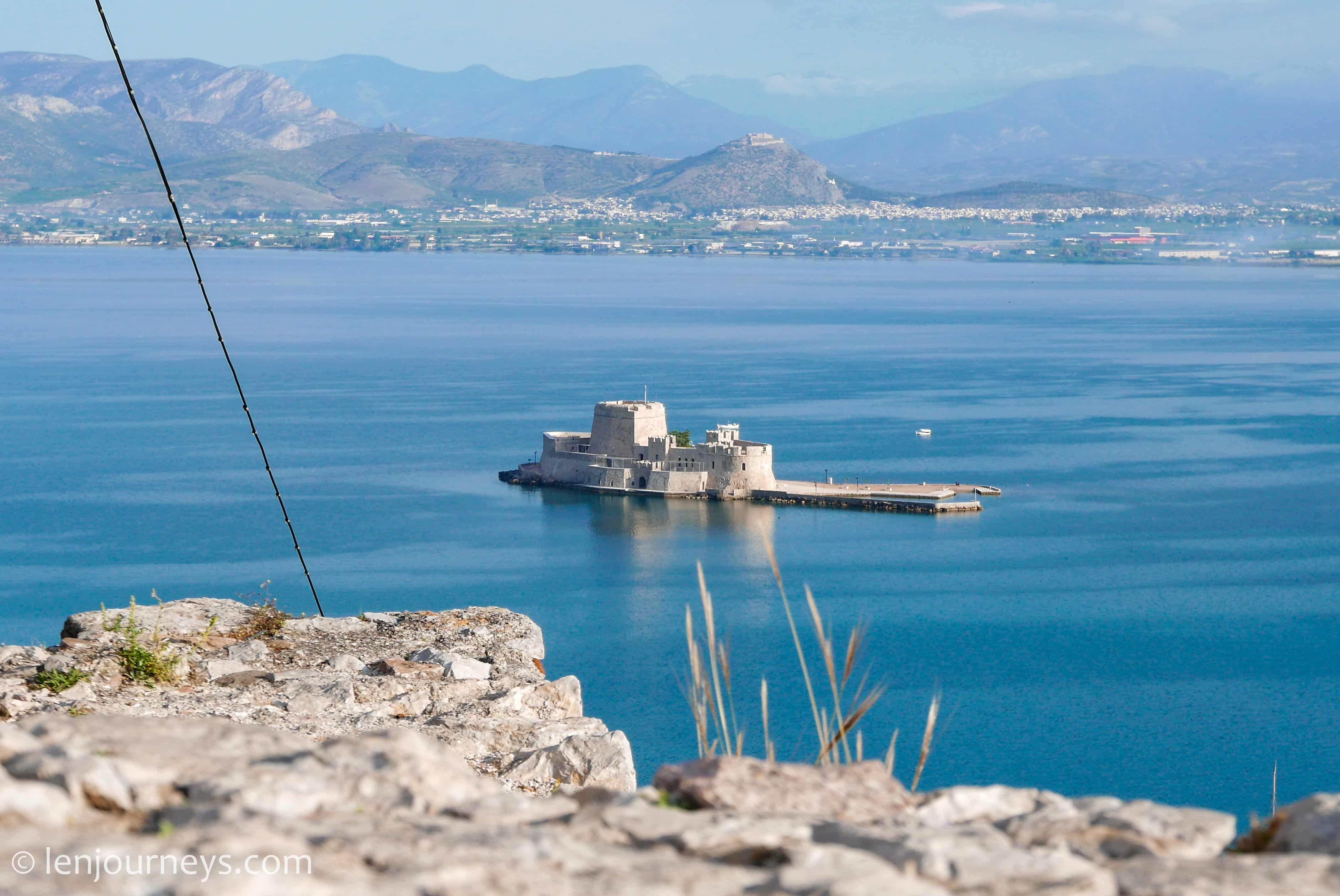
Nafplio’s harbour is no less picturesque, featuring a stone-cobbled promenade dotted with handsome taverns and natural swimming pools that get replenished with fresh seawater. It shimmers in the sun and changes shades with each cottony wisp of cloud drifting across the sky.
Out in the aquamarine bay, small fishing boats idle along the shoreline, and an ochre stone fortress – the 15th-century Bourtzi – seemingly floats among the waves. It was another project of the Venetians who initially constructed it to protect the harbour against pirates. These days, it serves as the bay’s pièce de résistance.
The simple joy of slowing down.
Yet Nafplio’s true delight lies not in ticking off all the attractions, but in the quiet moments between them. The town offers the simple joy of slowing down, from losing oneself in its breathtaking alleys, sipping wine in seaside taverns, to watching the Aegean Sea glow at sunrise over a centuries-old fortress.



2. The Acropolis of Mycenae
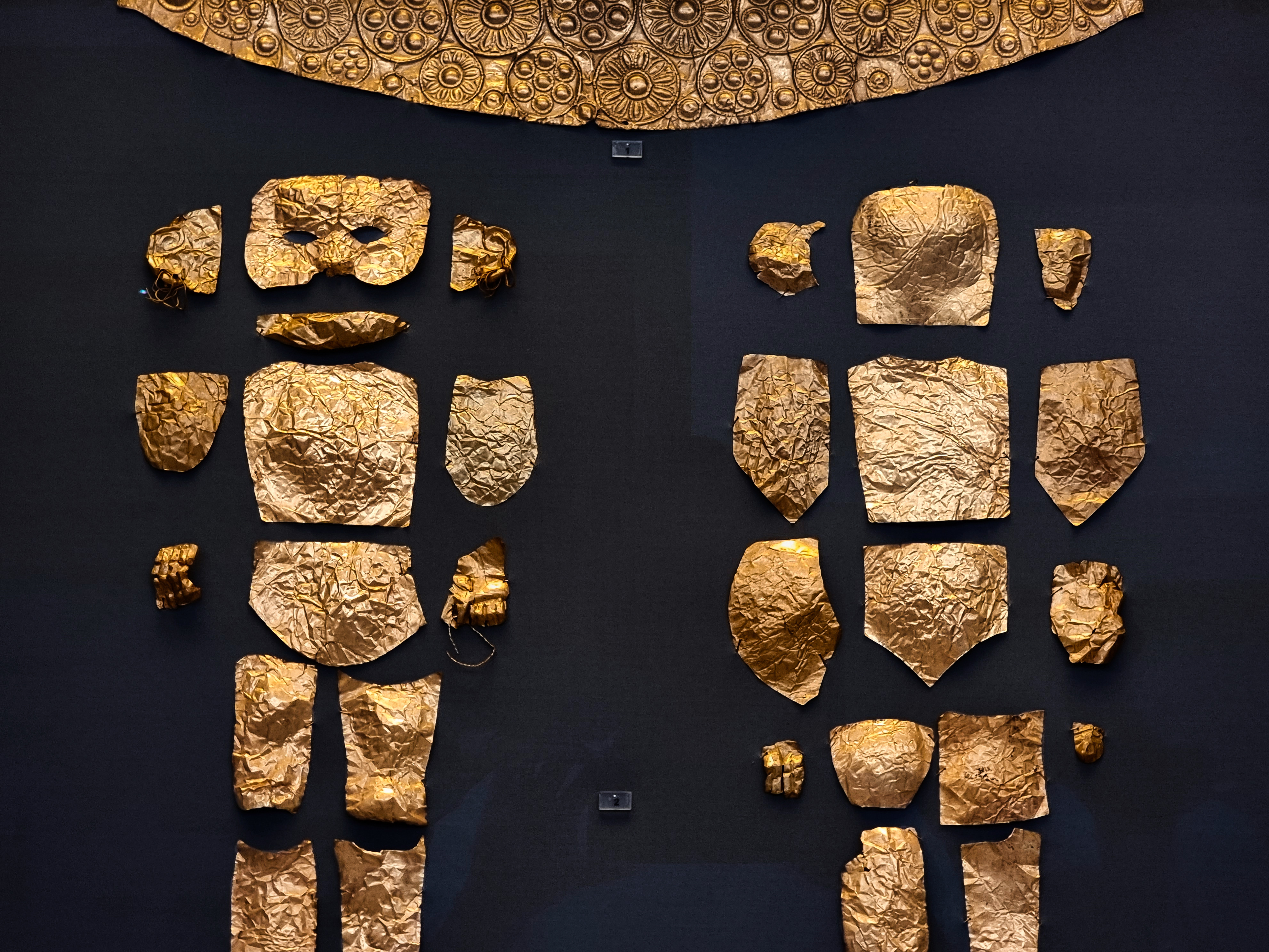
Not far from Nafplio is the UNESCO-listed Mycenae – an ancient citadel whose rulers, such as Perseus and Agamemnon, are referenced in Greek mythology and epics. The structures stand on a rocky hill, with walls and gates made of massive stone blocks that were roughly fitted together. It was so elaborate that the Greeks in later eras believed it was built by one-eyed giants called Cyclops. Mycenae also features a palatial layout that contains central courtyards, workshops, storage, and living quarters. Though largely left in ruins, it reflects a sophisticated civilization that once dominated southern Greece, the Cyclades, and Crete. In fact, the period of Greek history from ca. 1.600 BC to 1.100 BC is named the Mycenaean period after this mythical citadel.
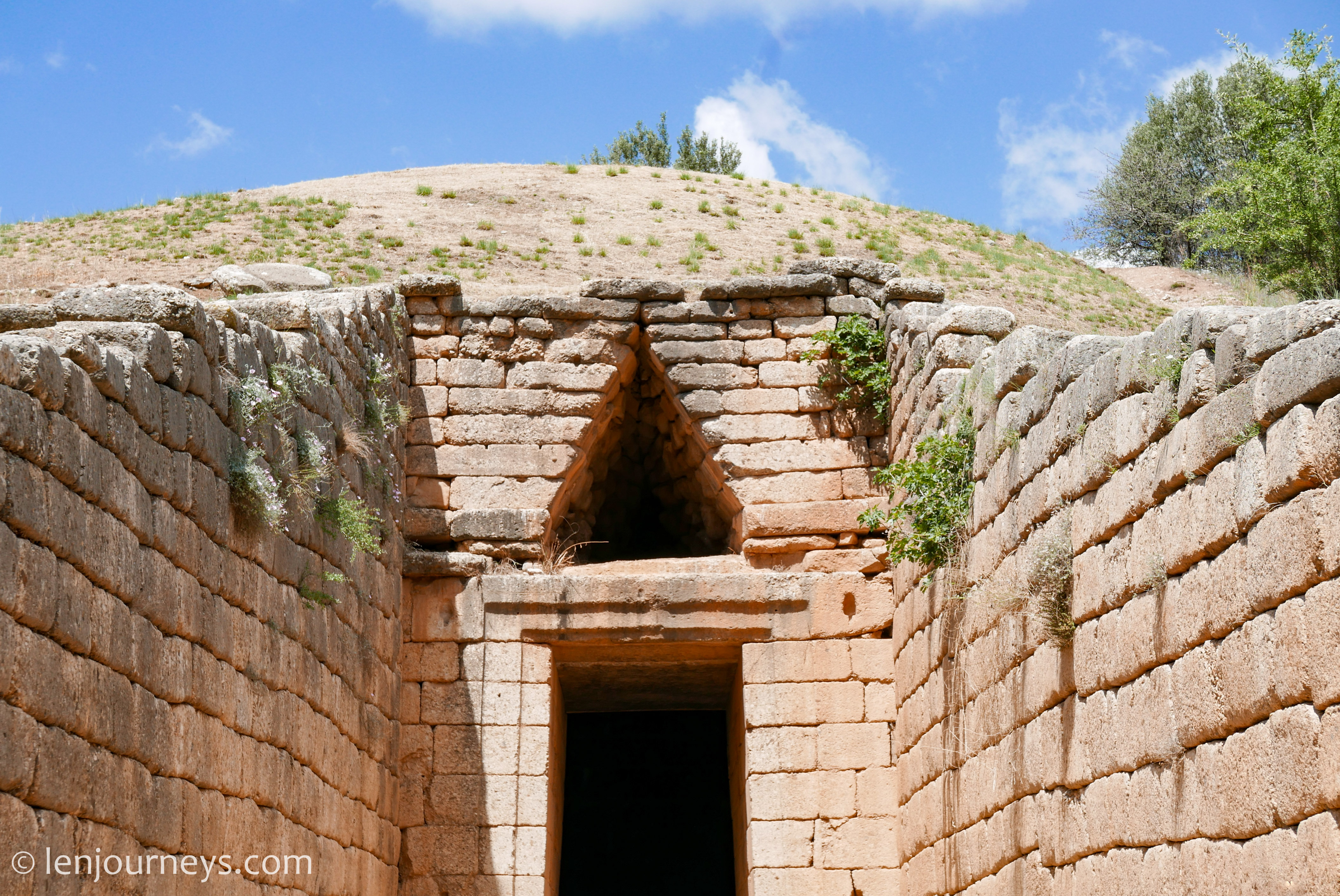
Nearby is an impressive beehive tomb whose history dates back to around the time of the Trojan War, approximately 3.000 years ago. Excavations in the 18th century suggested that this was the treasury or the burial ground of King Atreus or perhaps of his son, Agamemnon. Yet neither of them seems correct, and even now, little is known of the person who might have been buried in that tomb. One thing is certain: immense labour was involved in the construction of this grand structure, which contains a passageway, a narrow doorway, and a large circular burial chamber surmounted by a corbelled dome – the world’s largest that still exists. All components were built using the same Cyclopean stone blocks as in the citadel.




3. Sanctuary of Asklepios
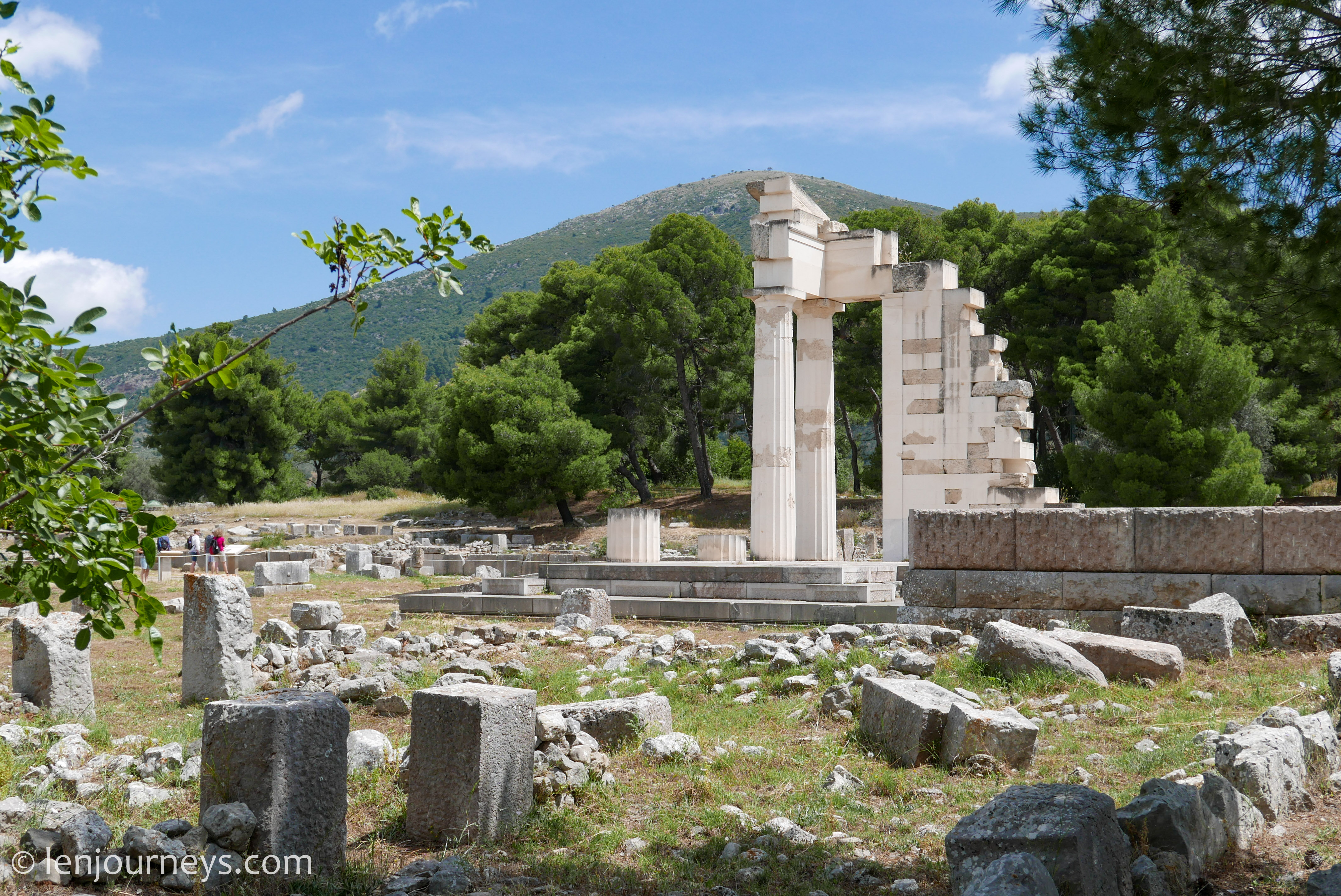
Nafplio is also the jumping-off point for the Sanctuary of Asklepios, the largest and most celebrated healing center in Classical Antiquity. It was founded in the 4th century B.C. in a scenic valley near Epidaurus, offering what we nowadays call holistic healthcare. The main component of the sanctuary is the tholos – a circular, elegant temple – dedicated to Asklepios, the Greek God of Healing and Apollo’s son. Patients received ritual purifications here before spending the night in hospital buildings where Asklepios himself would appear in their dreams and miraculously cure them or give them healing advice. Patients then reported their dreams to the priests, who would practice highly complex therapies based on years of observation of nature, the human body, and the interdependence between mental and physical health. Combined with the pleasant climate and surroundings, this led to highly successful medical treatments.
Besides the tholos, there is an array of structures that supported the treatments, including sports facilities, mineral spring baths, banquet halls, and dormitories. However, the most extraordinary monument in this UNESCO-inscribed compound is the theater – simply a masterpiece of Greek architecture. Positioned at the southern fringes of the sanctuary, this 14.000-seat theater is renowned for its unsurpassed beauty and excellent acoustics. Actually, it was so good that the spectators could hear clearly without amplification, regardless of their seating. The flawless arrangement of seats is said to enhance the audibility. Meanwhile, limestones – the main component of the seats – provide a filtering effect that minimizes background noise. Yet the most mesmerizing thing of all is that, after thousands of years, the theater can still retain its original function as a venue for musical and theatrical performances.


Tips for Visiting Nafplio
- The most obvious way to reach Palamidi Fortress is by climbing the flights of stairs. But it’s only recommended to do it during good weather, as the steps are steep and narrow. Alternatively, you can reach the fortress by car.
- Akronafplia is more easily accessible. The ascent begins right after the Land Gate in the town center and takes approximately 20 minutes.


I wasn’t aware of this new blog post from you, and as a matter of fact, when you published this James and I were in Greece! We just came back last night, and it’s really nice to see Nafplio and the ancient sites around it again through your photos. We weren’t as lucky with the weather though.
Glad to hear that you two have come back safely! 🙂 Travelling between Asia and Europe is so unpredictable now. Where else did you go, aside from Nafplio and Athens?
We went to Kalamata and Heraklion as well. If we had more time, we would’ve gone to some other islands as well. But maybe next time!
I’ve not been to Kalamata, but I tried oranges from there. Simply heaven! 😛
We bought olives and dried figs from Kalamata to bring home, and they’re so delicious!
I’m sure something in the soil that makes their products so good 😛